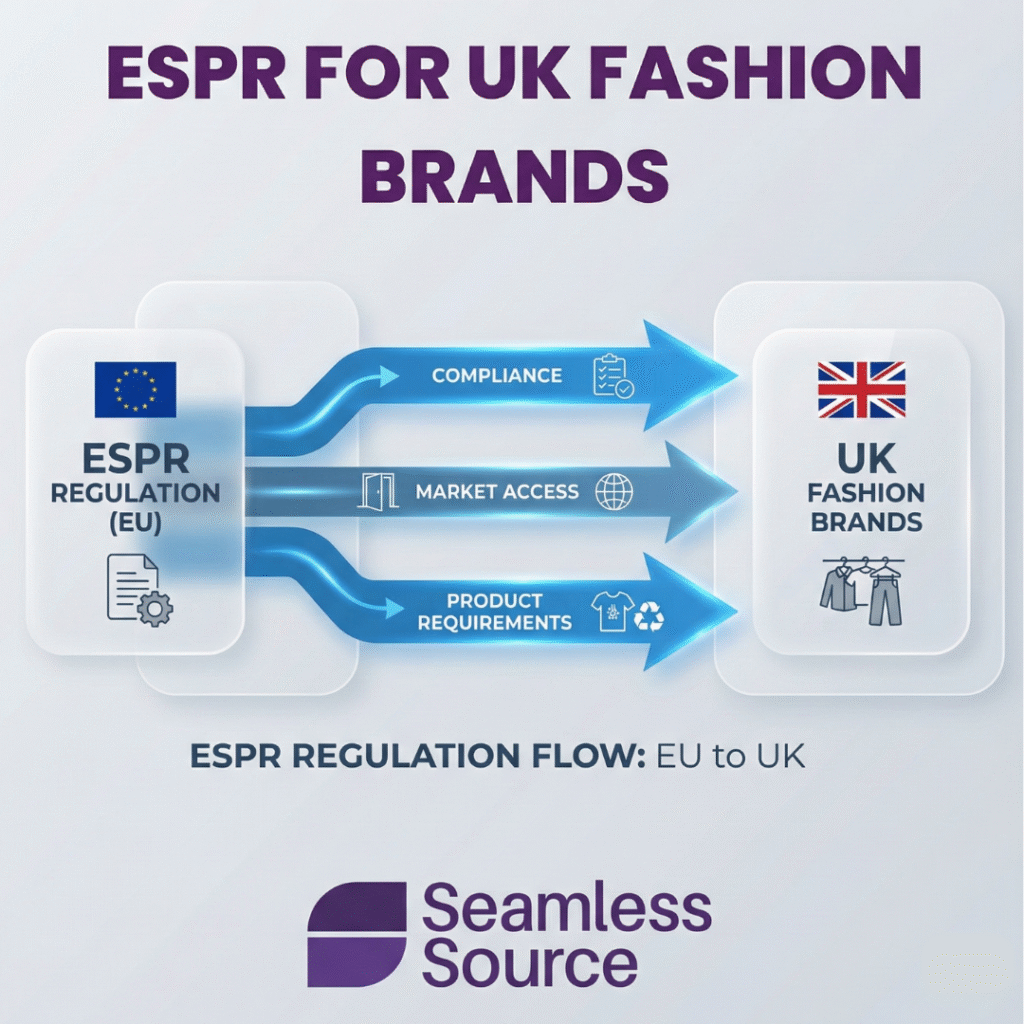
The Ecodesign for Sustainable Products Regulation (ESPR) marks a decisive shift in how fashion products are regulated in the European Union. For UK brands selling into the EU, ESPR is not optional, delayed, or softened by Brexit. It is now a hard requirement for market access.
ESPR moves sustainability from voluntary commitments and marketing claims into the realm of legally enforceable obligations. It introduces mandatory transparency through the Digital Product Passport, standardised environmental measurement through the Product Environmental Footprint, and strict rules on the handling of unsold goods.
Understanding ESPR for UK Fashion Brands is no longer a future concern. It is a present-day commercial risk and, for prepared brands, a competitive opportunity.
Table of Contents
What Is ESPR and Why It Applies to UK Fashion Brands
The ESPR entered into force in July 2024 as a core pillar of the European Green Deal. Unlike earlier EU directives, ESPR:
- Applies to nearly all physical products
- Covers the entire product lifecycle
- Is enforced through data, disclosure, and digital systems
Most importantly for British businesses, ESPR applies to any product placed on the EU market, regardless of where it is designed, manufactured, or headquartered. UK fashion brands exporting to the EU must therefore comply in full.
Textiles and footwear have been designated priority categories, meaning fashion brands are among the first sectors to face enforcement.
The Three Core ESPR Requirements Affecting Fashion Brands
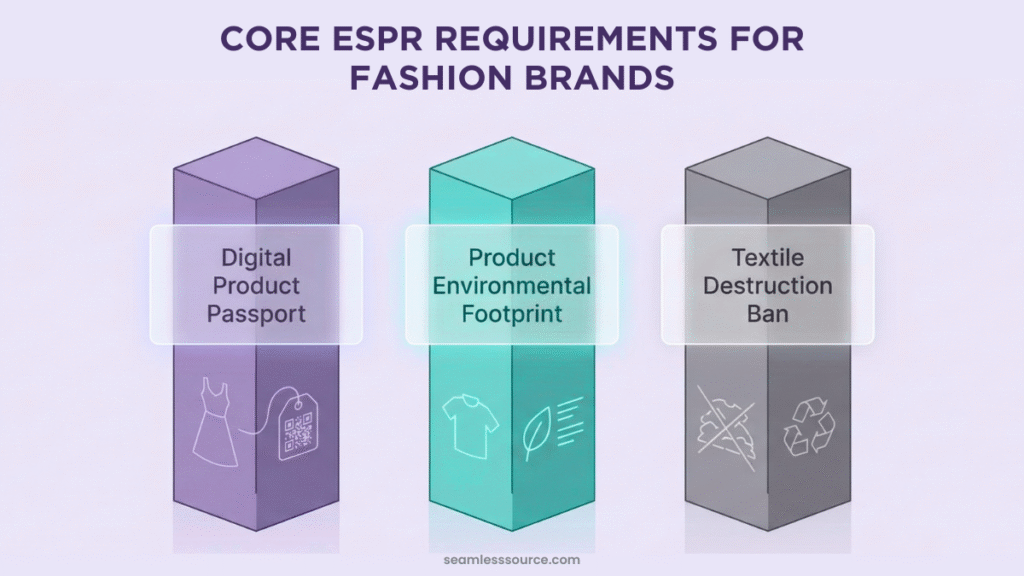
1. Digital Product Passport (DPP) for Fashion
The Digital Product Passport (DPP) is the central enforcement mechanism under ESPR. Each garment will require a structured digital record effectively a “digital twin” — accessible via QR code, NFC, or RFID and connected to a central EU registry.
For fashion products, the Digital Product Passport is expected to include:
- Detailed fibre composition and material percentages
- Supply chain and manufacturing locations
- Component-level traceability (zips, buttons, trims, labels)
- Environmental impact data calculated using Product Environmental Footprint (PEF)
- Repair, reuse, resale, and recycling guidance
Without a compliant Digital Product Passport, products may be delayed, rejected, or blocked at EU borders.
2. Product Environmental Footprint (PEF): A Mandatory EU Standard
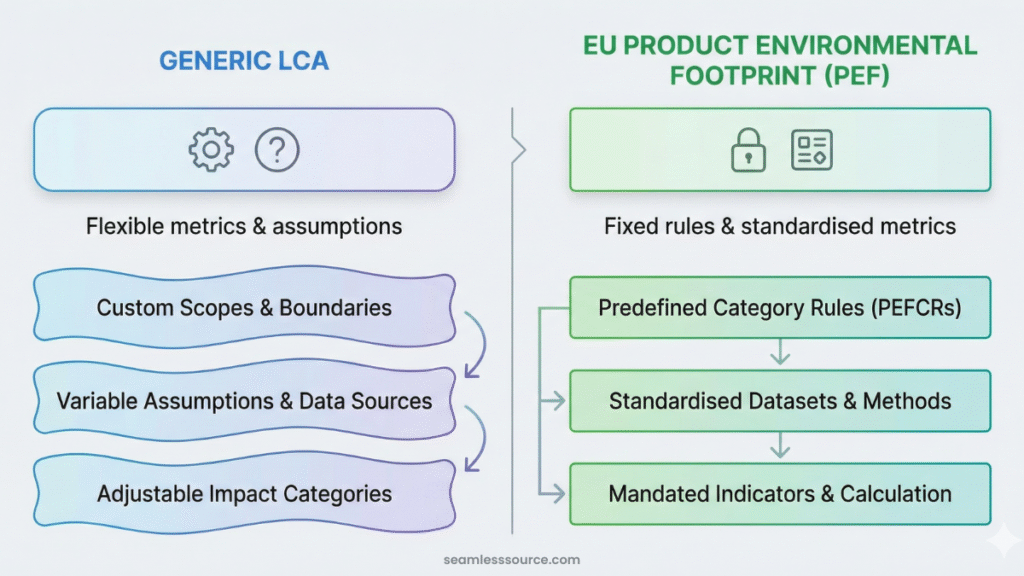
A critical and often misunderstood requirement of ESPR is the use of the Product Environmental Footprint (PEF) methodology.
ESPR does not rely on generic Life Cycle Assessments (LCAs) alone.
While ISO-based LCAs allow flexible assumptions, system boundaries, and metric selection, PEF is a rigid, standardised EU methodology designed to ensure:
- Comparability between brands
- Consistent environmental claims
- Reduced greenwashing risk
For UK fashion brands, this means:
- Existing LCAs may not meet ESPR requirements
- Environmental data for Digital Product Passports must follow PEF rules
- Early PEF alignment reduces future compliance risk and rework
PEF data will also influence Extended Producer Responsibility (EPR) fees and regulatory scrutiny.
3. The Textile Destruction Ban and Transparency Obligations
ESPR introduces a ban on the destruction of unsold textiles and footwear, ending long-standing industry practices.
However, the timeline is often misunderstood.
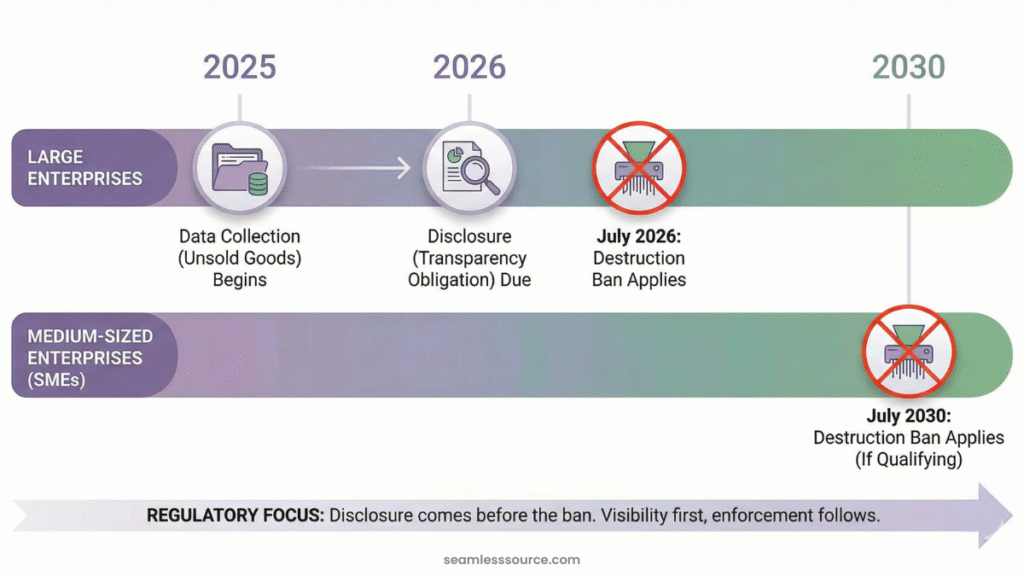
Large Enterprises
- Transparency obligation: Data on unsold goods must be collected from the first full financial year after ESPR enters into force (practically 2025 data, disclosed in 2026)
- Destruction ban applies: July 2026
Medium-Sized Enterprises (SMEs)
- Destruction ban applies from July 2030, only if SME criteria are met
Importantly, disclosure comes before the ban. Regulators gain visibility first enforcement follows.
Critical Legal Clarification: What Counts as a Medium-Sized Enterprise (SME)
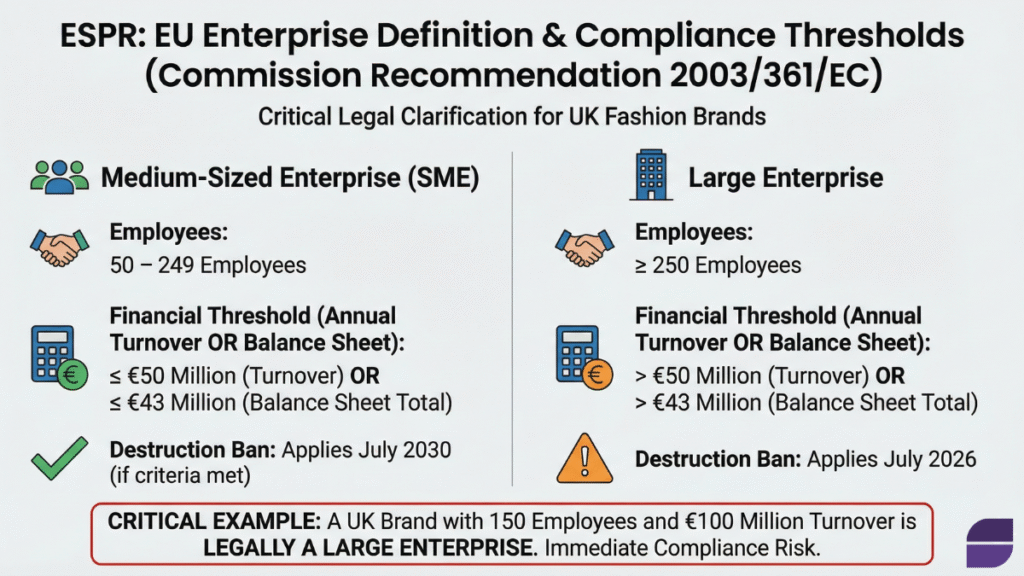
Under EU law (Commission Recommendation 2003/361/EC), a business qualifies as a Medium-Sized Enterprise only if it meets both:
- 50–249 employees, and
- Annual turnover of €50 million or less OR balance sheet total of €43 million or less
A UK fashion brand with:
- 150 employees but
- €100 million in annual revenue
…is legally a Large Enterprise, not an SME.
Why this matters: Large enterprises must comply with the textile destruction ban in 2026, not 2030. Misclassification could result in delayed compliance and regulatory exposure.
Extended Producer Responsibility (EPR) and Cost Implications
ESPR works alongside Extended Producer Responsibility (EPR) for textiles, embedding sustainability costs directly into business operations.
Under EPR:
- Brands pay for collection, sorting, and recycling
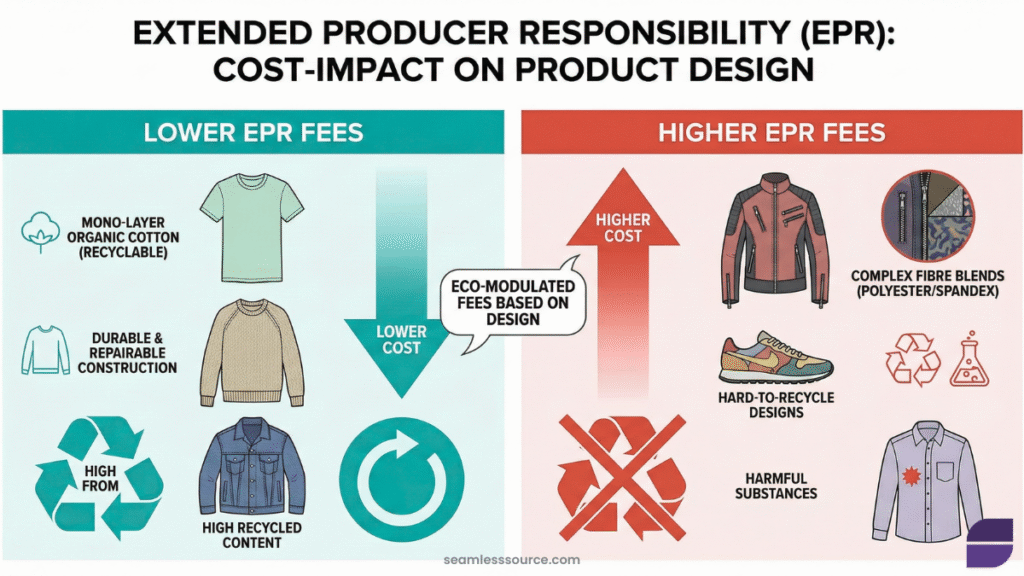
- Fees are eco-modulated
- Product design decisions affect cost
Lower fees are linked to:
- Mono-material garments
- High recycled content
- Durable, repairable construction
Higher fees apply to:
- Complex fibre blends
- Hard-to-recycle designs
- Harmful substances
For UK fashion brands, EPR turns sustainability into a margin and pricing issue, not just a compliance exercise.
Risks of Non-Compliance for UK Fashion Brands
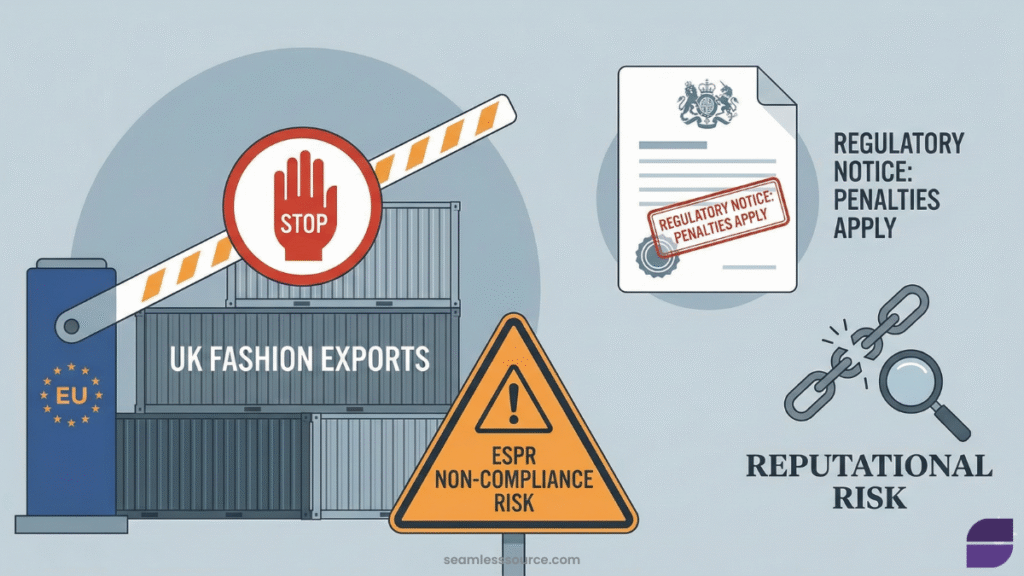
Failure to comply with ESPR can lead to:
- Loss of EU market access
- Blocked or delayed shipments at customs
- Retailer and marketplace delisting
- Financial penalties set by EU Member States
- Public reputational damage through mandatory disclosures
For post-Brexit UK fashion brands, ESPR functions as a non-tariff trade barrier that must be actively managed.
A Practical ESPR Compliance Roadmap for UK Fashion Brands
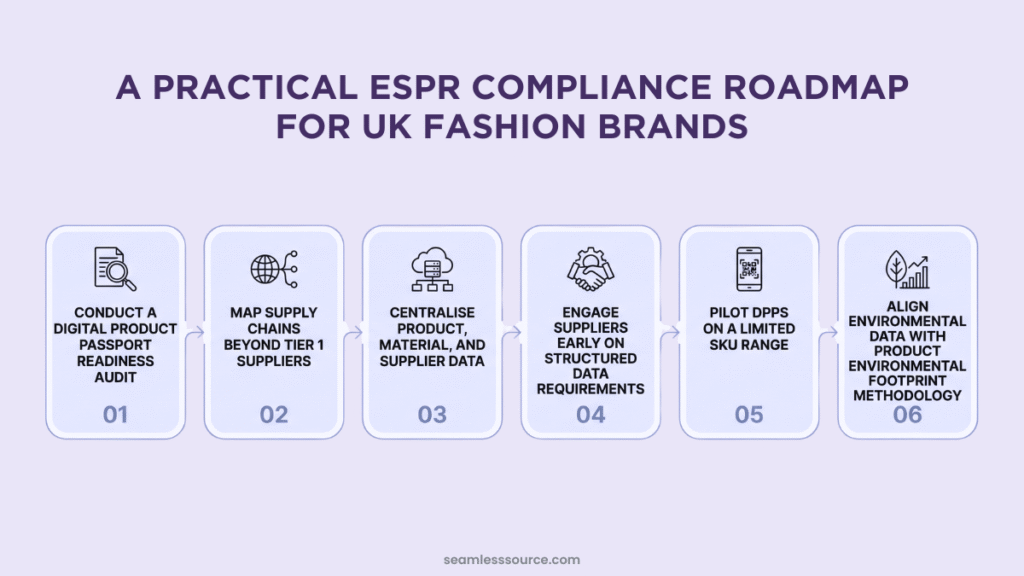
- Conduct a Digital Product Passport readiness audit
- Map supply chains beyond Tier 1 suppliers
- Centralise product, material, and supplier data
- Engage suppliers early on structured data requirements
- Pilot DPPs on a limited SKU range
- Align environmental data with Product Environmental Footprint methodology
Brands that start early reduce cost, disruption, and enforcement risk.
Why Seamless Source Is the Best ESPR Solution for UK Fashion Brands
For UK fashion brands dealing with ESPR compliance, Digital Product Passports, Product Environmental Footprint data, and the textile destruction ban, the real challenge is not understanding the regulation, it is executing compliance accurately, efficiently, and at scale.
This is where Seamless Source stands apart.
Seamless Source is purpose built for UK fashion brands selling into the EU, with ESPR compliance at its core not retrofitted onto a generic sustainability platform.
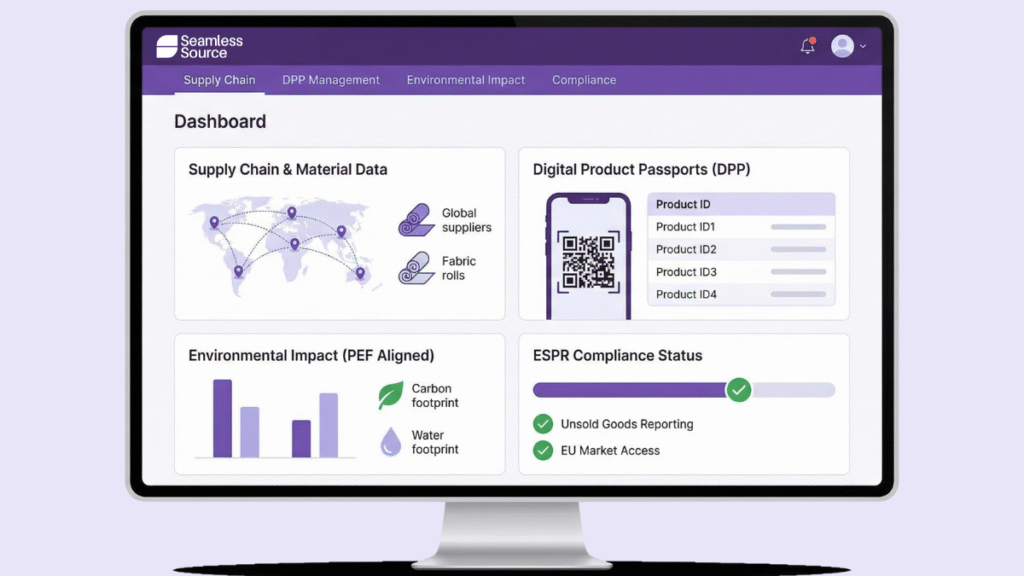
It directly supports the highest risk ESPR requirements by enabling:
- Structured, EU ready Digital Product Passport data
- Environmental impact data aligned with Product Environmental Footprint (PEF) principles
- Accurate tracking and reporting of unsold goods transparency obligations
- Centralised supplier data, certificates, and material composition
Unlike enterprise only tools designed for large EU corporates, Seamless Source is built for fashion brands with lean teams and complex global supply chains.
By replacing fragmented spreadsheets and email based data collection with a single source of truth, Seamless Source helps brands move from data chaos to EU ready compliance faster, with less risk.
More than a compliance tool, it enables brands to:
- Maintain EU market access
- Reduce long-term regulatory costs
- Strengthen retailer trust
- Support credible, data-backed sustainability claims
For UK fashion brands serious about selling into the EU, Seamless Source is not just the safest option, it is the smartest one.
Ready to Implement Your Digital Product Passports?
If you’re preparing for Digital Product Passports and want a clear, guided path to compliance, Seamless Source makes it simple.
Our experts assess your supply chain, review your product and supplier data, and deliver a practical DPP implementation roadmap within 4 days, no guesswork, no unnecessary complexity.
Frequently Asked Questions
Is ESPR mandatory for UK fashion brands?
Yes. If you sell into the EU, ESPR applies regardless of where your business is based.
When does the Digital Product Passport become mandatory for fashion?
Textiles are a priority category. Brands should treat 2025–2027 as the critical preparation window.
Can we rely on existing LCA studies?
Only if they can be aligned with Product Environmental Footprint (PEF) rules.
Does Seamless Source manage verification?
Yes. We support onboarding, verification, and training.
Conclusion: ESPR as a Competitive Advantage for UK Fashion Brands
ESPR for UK Fashion Brands is not a temporary regulation. It is the foundation of how fashion will be regulated in the EU for the next decade.
Brands that invest early in the right data infrastructure and compliance systems will secure market access, reduce long-term costs, and outperform competitors who delay or underestimate the complexity.
The question is no longer whether to comply, but how well.