In the Personal Protective Equipment (PPE) industry, trust is not a marketing message, it is a legal, operational, and ethical obligation. For brands manufacturing workwear, safety gloves, protective footwear, and industrial PPE, product integrity directly impacts worker safety, buyer confidence, and regulatory compliance.
As regulatory scrutiny increases across the EU and UK, Traceability in PPE has become a core requirement rather than a future ambition. Buyers, distributors, and public procurement bodies now expect verifiable proof of compliance, not just certificates stored in folders or PDFs shared over email.
For PPE brands operating across multiple suppliers, product categories, and markets, traditional approaches to documentation and traceability are no longer sufficient. Fragmented systems make it difficult to respond quickly to audits, tenders, recalls, or market surveillance requests.
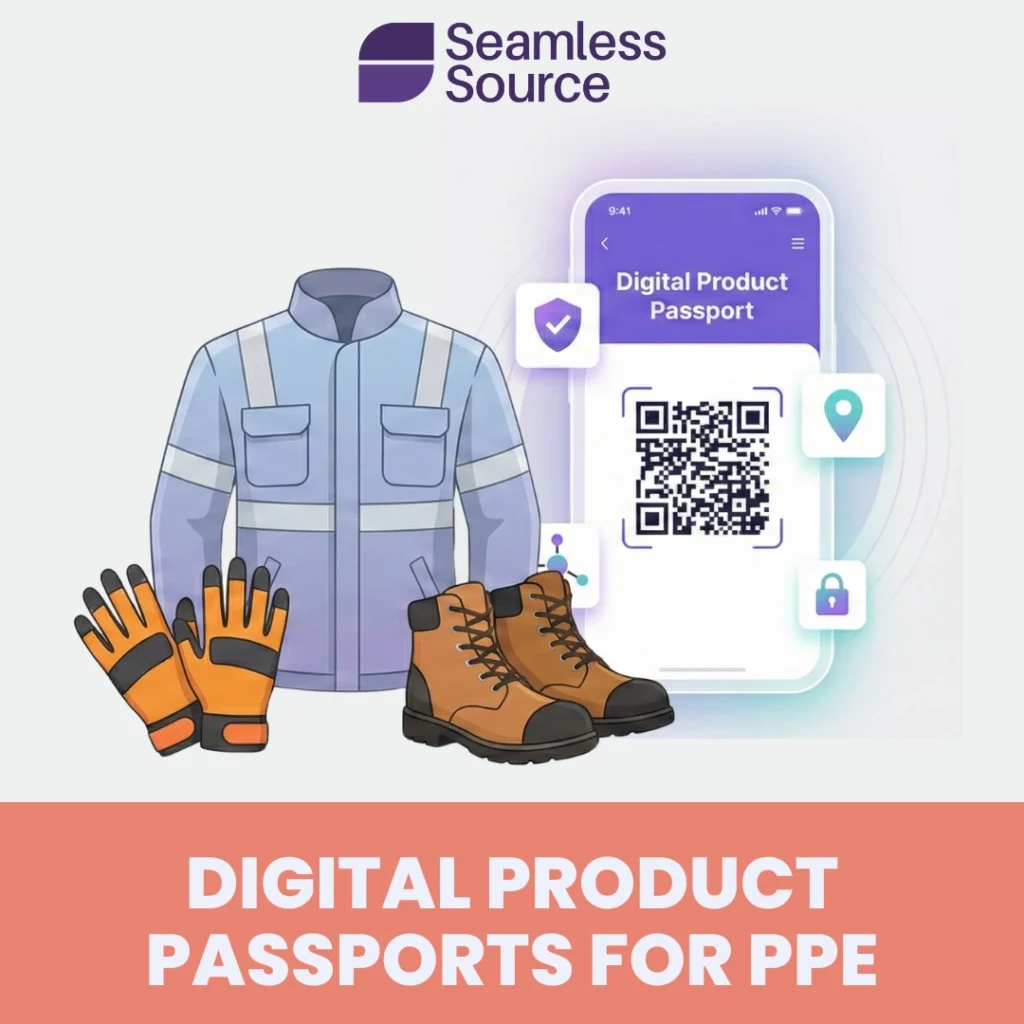
This is where Digital Product Passports (DPPs) are emerging as a practical solution, providing a structured, digital way to manage compliance, transparency, and product-level data at scale.
The Unique Challenges of PPE Supply Chains
PPE supply chains are complex, regulated, and often global. A single workwear garment, glove, or safety shoe may involve multiple raw materials, components, and manufacturing steps across different countries.
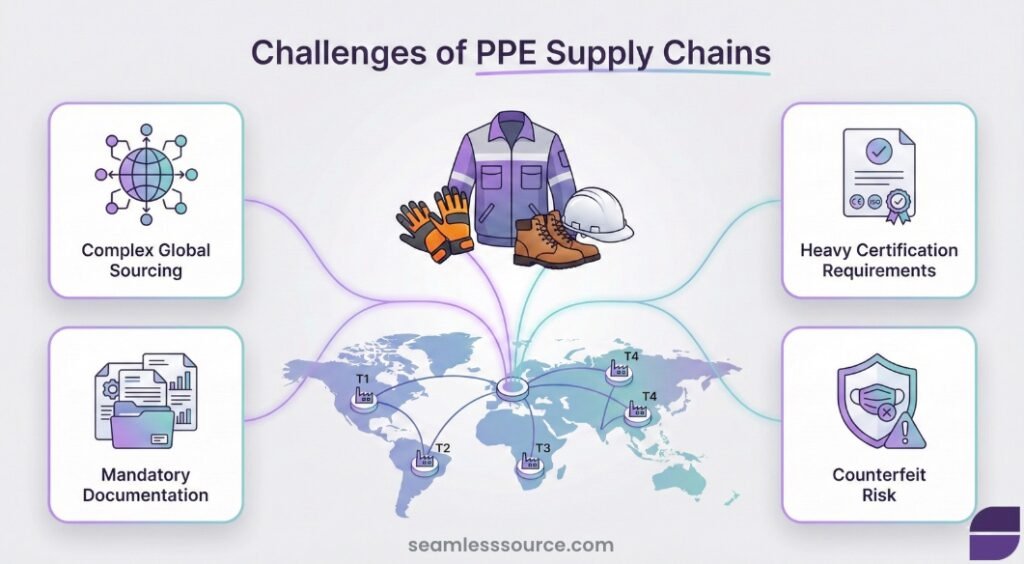
This complexity creates several challenges that make traceability in PPE particularly difficult:
01. Complex global sourcing
Tracking materials, components, and manufacturing processes across Tier 1–4 suppliers is difficult without a central system. Limited visibility increases compliance and reputational risk.
02. Heavy certification requirements
PPE products must comply with Regulation (EU) 2016/425 and relevant EN, ISO, CE, and UKCA standards. Managing certificates, test reports, and conformity assessments across product lines is resource-intensive.
03. Mandatory documentation obligations
PPE products must comply with Regulation (EU) 2016/425 and relevant EN, ISO, CE, and UKCA standards. Managing certificates, test reports, and conformity assessments across product lines is resource-intensive.
04. Counterfeit and non-compliant products
Hidden supply chains increase the risk of counterfeit PPE entering the market, undermining brand trust and exposing legitimate manufacturers to liability.
These challenges highlight the need for a digital-first approach that supports PPE supply chain transparency and simplifies ongoing compliance.
What Is a Digital Product Passport (DPP)?
A Digital Product Passport (DPP) is a structured digital record that contains key information about a product throughout its lifecycle from sourcing and manufacturing to compliance and end use.
For PPE brands, a DPP typically includes:
- Product identification (model, SKU)
- Material composition
- Manufacturing and sourcing locations
- Certifications and test reports
- Compliance documentation
- Batch or lot information
The DPP is accessed via a QR code or NFC tag embedded on the product, label, packaging, or technical documentation. When scanned, it links to a secure digital record that can be updated over time.
Compared to traditional documentation methods, DPPs offer clear advantages:
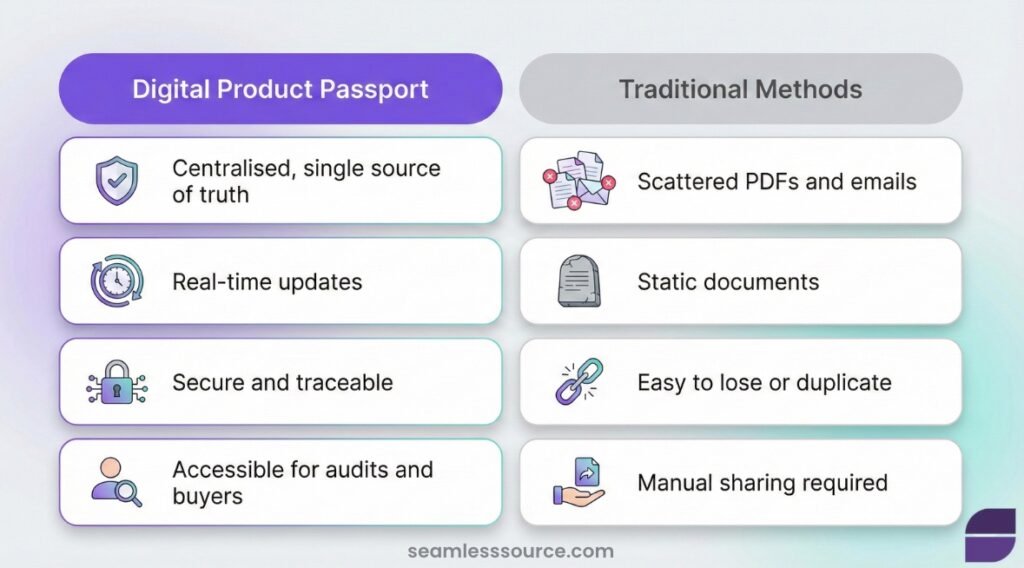
By digitising compliance data, DPPs support PPE compliance management in a far more efficient and scalable way.
Why Digital Product Passports Are Especially Valuable for PPE Brands
For PPE brands, DPPs deliver tangible operational and commercial benefits:
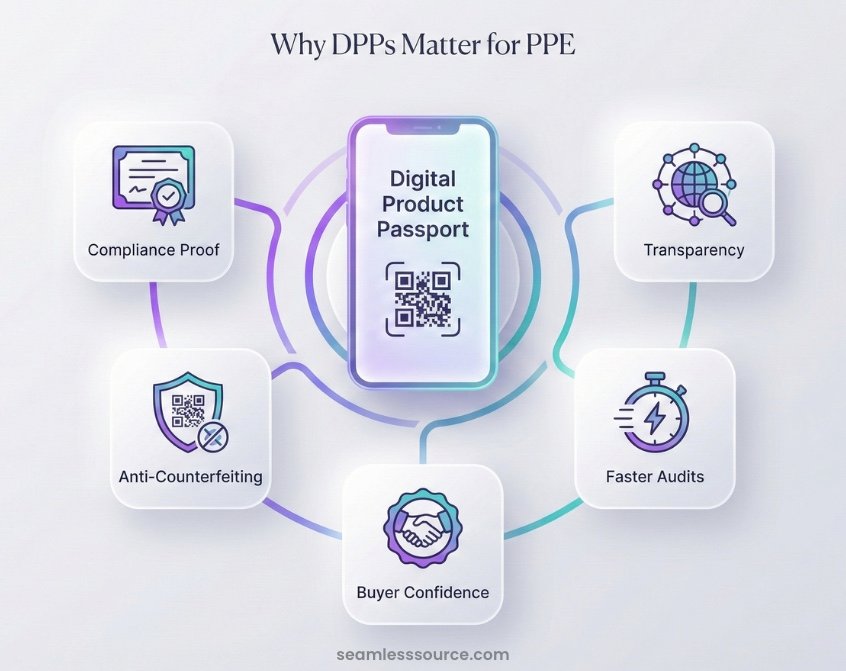
01. Verifiable proof of compliance
DPPs centralise CE, UKCA, EN, and ISO documentation, making it easy to demonstrate compliance during audits, inspections, or tenders.
02. End to end supply chain transparency
Brands can map and communicate their supply chains clearly, supporting internal risk management and external trust.
03. Anti-counterfeiting and product authenticity
A unique digital identity allows buyers and distributors to verify that a product is genuine and compliant.
04. Faster audits and buyer onboarding
Instead of compiling documents manually, compliance data is instantly accessible, reducing response times and administrative burden.
05. Increased buyer confidence
Providing transparent access to compliance and product data strengthens long-term relationships with distributors and institutional buyers.
These advantages make traceability in PPE not just a compliance tool, but a competitive differentiator.
Regulatory Momentum: Why PPE Brands Must Act Now
The regulatory direction in the EU is clear: product compliance is moving towards digital-first frameworks.
EU Ecodesign for Sustainable Products Regulation (ESPR)
The ESPR, in force since 18 July 2024, sets the framework for Digital Product Passports (DPPs) and prioritises product groups such as textiles, apparel and footwear, as well as other categories like electronics and furniture, for future DPP requirements through delegated acts.
Proposed amendments to PPE Regulation (EU) 2016/425
The European Commission has signalled a shift towards:
- Digital EU Declarations of Conformity
- Digital instructions for use
- Direct integration of compliance data into DPPs
Buyer and procurement expectations
Large B2B buyers increasingly require digital traceability and structured compliance data as part of supplier qualification.
For PPE brands, early adoption of DPPs reduces future compliance risk and avoids rushed implementations later.
How PPE Brands Can Get Started Without Over-Engineering
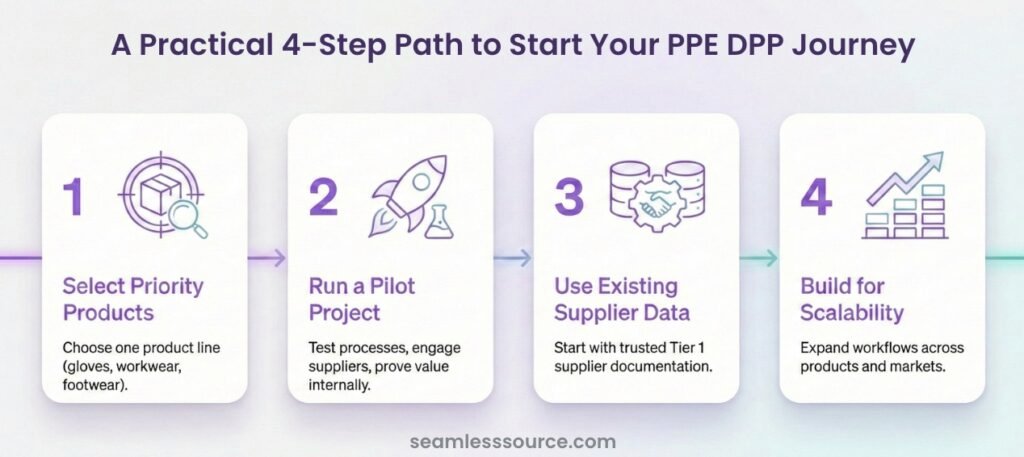
A successful DPP strategy starts small and scales gradually:
- Select priority products: Choose one product line such as gloves, workwear, or safety footwear.
- Run a pilot project: Test processes, engage suppliers, and demonstrate value internally.
- Use existing supplier data: Work with trusted Tier 1 suppliers to gather documentation.
- Build for scalability: Ensure systems and workflows can expand across product ranges and markets.
This approach makes digital traceability for PPE brands achievable without overwhelming internal teams.
How Seamless Source Delivers a Complete DPP Solution for PPE Brands
Seamless Source supports PPE brands with a purpose-built Digital Product Passport platform designed for regulated products.
Our solution includes:
- End-to-end DPP implementation
- Certification mapping and standardisation (CE, UKCA, EN, ISO)
- Multi-tier supply chain mapping
- Buyer- and auditor-friendly digital interfaces
- Low internal workload through automation and AI-assisted data structuring
We help PPE brands turn compliance into clarity and traceability into trust.
Start with a Practical DPP Pilot for PPE
Implementing Digital Product Passports doesn’t have to be complex or time-intensive.
At Seamless Source, we run a focused DPP pilot programme designed specifically for PPE brands that want to explore Digital Product Passports in a practical, low-risk way.
What the pilot includes
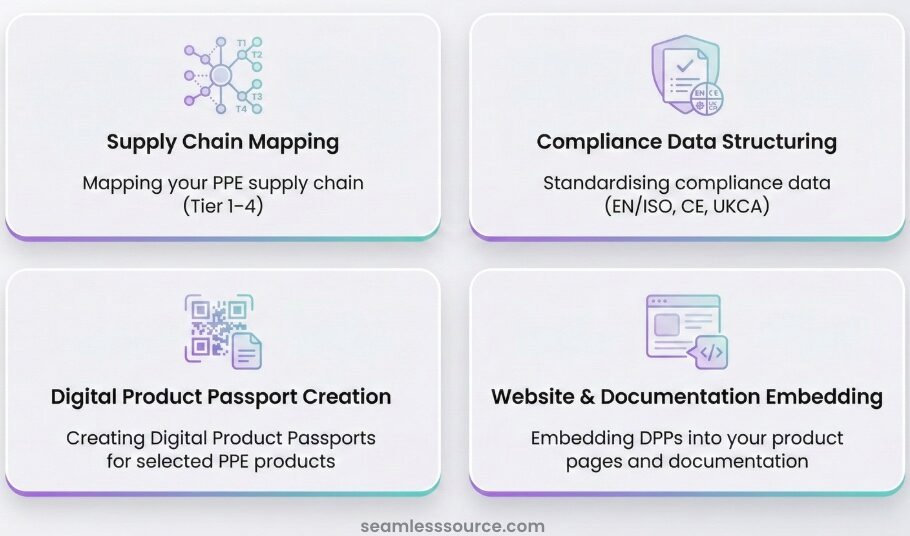
We work closely with a small number of selected PPE brands and handle the operational work end to end, including:
- Mapping your PPE supply chain (Tier 1–4, where available)
- Structuring and standardising compliance data (EN / ISO standards, CE / UKCA, certifications)
- Creating Digital Product Passports for selected PPE products
- Embedding DPPs into your website, product pages, or documentation
Your team typically spends 1–2 hours per week reviewing and approving data, we take care of the rest.
Book a 30-minute walkthrough
In this session, you will:
- See how Digital Product Passports could work for your PPE products
- Understand what compliance and traceability data you actually need today
- Explore how a small, low-commitment pilot could be implemented
Frequently Asked Questions
What is traceability in PPE?
Traceability in PPE refers to the ability to track and verify product data such as sourcing, manufacturing, certifications, and compliance across the supply chain.
Are Digital Product Passports mandatory for PPE?
DPPs are not yet mandatory for all PPE, but upcoming EU regulations strongly indicate that digital compliance mechanisms will become standard.
Which PPE products are best suited for DPPs?
Workwear, safety gloves, protective footwear, and multi-component PPE products are ideal candidates due to their certification requirements.
How long does it take to implement a PPE DPP pilot?
A pilot can typically be implemented within a few weeks, depending on data availability and supplier engagement.
Do DPPs replace existing certifications?
No. DPPs organise and present existing certifications digitally, they do not replace regulatory requirements.
Conclusion: From Compliance Burden to Competitive Advantage
Digital Product Passports are becoming foundational infrastructure for regulated industries. For PPE brands, traceability in PPE is no longer optional, it is essential for compliance, risk management, and market credibility.
Brands that adopt DPPs early will benefit from stronger buyer trust, smoother audits, and greater operational resilience.