PPE compliance management is a critical responsibility for Personal Protective Equipment (PPE) businesses. Manufacturers carry the sole and ultimate responsibility for ensuring that every unit placed on the market meets regulatory safety requirements.
However, in many organisations the data required to prove compliance is scattered across spreadsheets, shared folders, emails, and individual employees.
From our experience working with PPE businesses, product certifications, technical files, and supplier documentation are often stored across multiple disconnected locations. While this may function day to day, it creates serious risks during audits, staff turnover, or product updates.
This level of fragmentation is not just an inconvenience, it is a hidden operational threat.
Modern PPE compliance management requires more than storing documents. It requires structured product intelligence, traceability, and a reliable system of record.
TL;DR
Many PPE companies manage compliance using spreadsheets, folders, and email. This leads to knowledge loss, audit stress, and certification confusion. Seamless Source solves this by structuring product, certification, and supply chain data in one platform.
What Is PPE Compliance Management?
PPE compliance management is the process of organising, maintaining, and verifying all documentation and certifications required to prove that protective equipment meets regulatory standards.
This typically includes:
- Technical files
- Conformity assessments
- Supplier documentation
- Test reports Bills of materials
- Product variant tracking
- Certification records
As product ranges grow and supply chains expand, managing this information manually becomes increasingly complex.
Without a structured system, businesses risk using outdated data, losing certification context, or failing to respond efficiently during audits.
The Operational Risk No One Talks About
In the PPE industry, the greatest risk is not always physical. Often it is the operational risk created by fragmented product and compliance data.
Manufacturers must comply with Basic Health and Safety Requirements (BHSR) and maintain technical documentation for many years after a product enters the market.
When that documentation is spread across disconnected tools, organisations lose visibility and control.
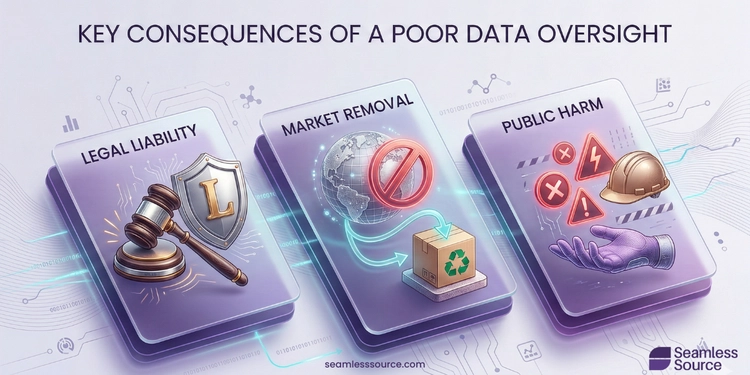
Key consequences of poor data oversight:
- Legal Liability: Manufacturers remain responsible for proving product conformity.
- Market Removal: Authorities may remove non-compliant equipment from the EU market.
- Public Harm: Incorrect specifications or outdated components can compromise safety.
From what we consistently see in PPE businesses, most of these issues do not come from negligence. They come from
Compliance Dependency on Individuals
Many PPE companies rely on a few experienced employees who hold critical compliance knowledge.
When that knowledge lives in people rather than systems, the business becomes fragile.
01. Tribal Knowledge
Important compliance processes live in people’s memory instead of a structured system.
Result: When someone leaves, the process disappears with them.
02. Staff Turnover
New team members struggle to understand certification logic and product history.
Result: Delays, mistakes, and lost time during audits or product updates.
03. Unclear Responsibilities
Compliance tasks aren’t clearly mapped across teams.
Result: Things get missed, duplicated, or incorrectly handled.
Where PPE Compliance Knowledge Usually Lives
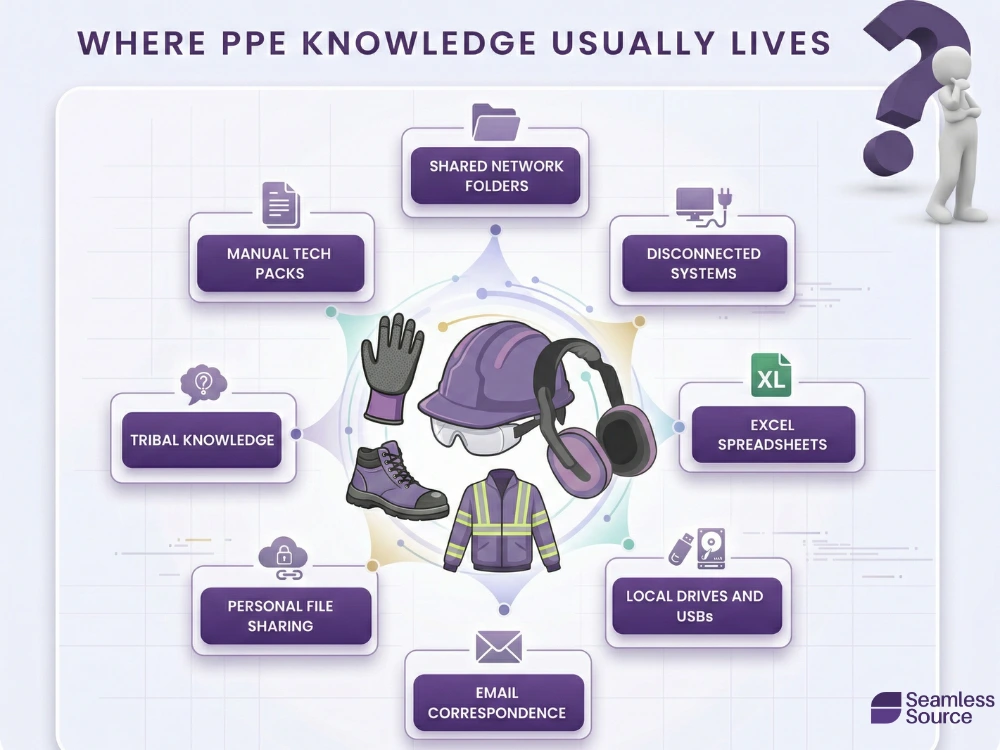
In many PPE organisations, product intelligence is scattered across disconnected tools that do not communicate.
From our experience, the following sources are extremely common.
- Manual Tech Packs: Managing large volumes of files manually increases the risk of lost updates and corrupted information.
- Shared Network Folders: Shared drives create uncontrolled copies and make version tracking difficult.
- Excel Spreadsheets: Manual trackers often contain errors and lack real-time visibility.
- Local Drives & USBs: Files saved on individual devices risk permanent loss.
- Email Correspondence: Compliance documents shared via email quickly multiply into multiple conflicting versions.
- Personal File-Sharing: Employees using personal accounts can unintentionally remove sensitive data from the company.
- Tribal Knowledge: Important compliance logic is often stored in the experience of long-term staff.
- Disconnected Systems: When tools do not communicate, product changes can invalidate certifications without teams noticing.
This scattered infrastructure increases operational risk and weakens regulatory readiness.
What Happens When Key Staff Leave?
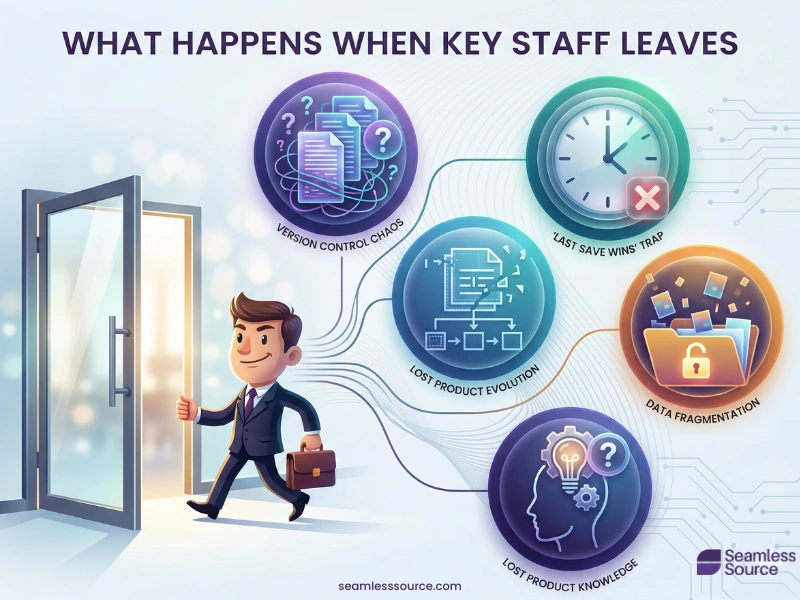
When an experienced compliance professional leaves, the business often loses more than just an employee.
They lose historical context.
- Lost Product Evolution: The reasoning behind design decisions and certification choices becomes unclear.
- Version Control Chaos: Teams unknowingly work from outdated product specifications.
- The “Last Save Wins” Trap: Important documentation changes are overwritten or lost.
- Data Fragmentation: Information spread across systems loses meaning without context.
- Lost Certification Context: New staff must reconstruct the logic behind certification coverage.
During audits this lack of clarity can slow responses and damage credibility.Without a structured system of record, years of accumulated knowledge can disappear.
Signs Your PPE Compliance System Is At Risk
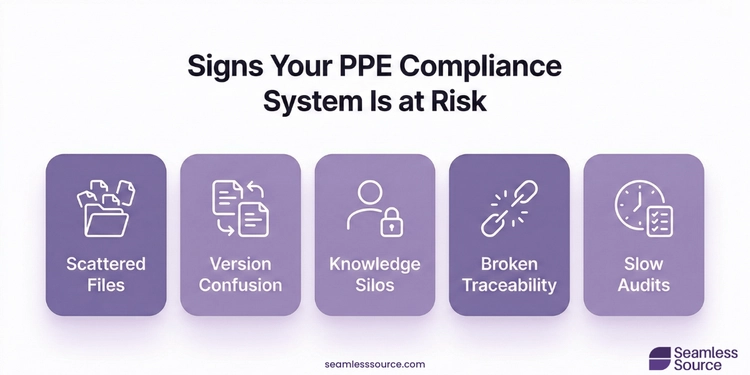
Many companies only realise the weakness of their systems during audits.
Common warning signs include:
- Certifications stored across multiple folders
- Teams unsure which document version is correct
- Compliance knowledge held by one person
- Audit preparation taking weeks
- No clear traceability between SKUs and certificates
- Supplier changes not reflected in documentation
If these situations exist, compliance risk is already present.
How Seamless Source Centralises PPE Product Intelligence?
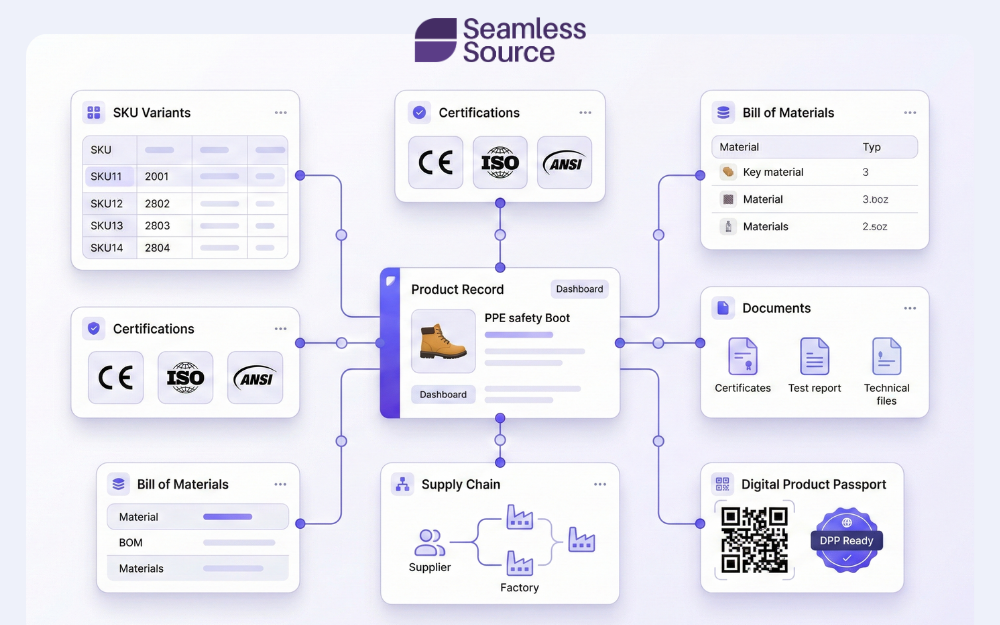
To manage PPE compliance reliably, businesses need more than documents and spreadsheets. They need a structured system where product, certification, and supply chain data are connected.
Seamless Source was built to provide exactly that.
Instead of information living across folders, email threads, and individual employees, the platform creates a single system of record for product and compliance data.
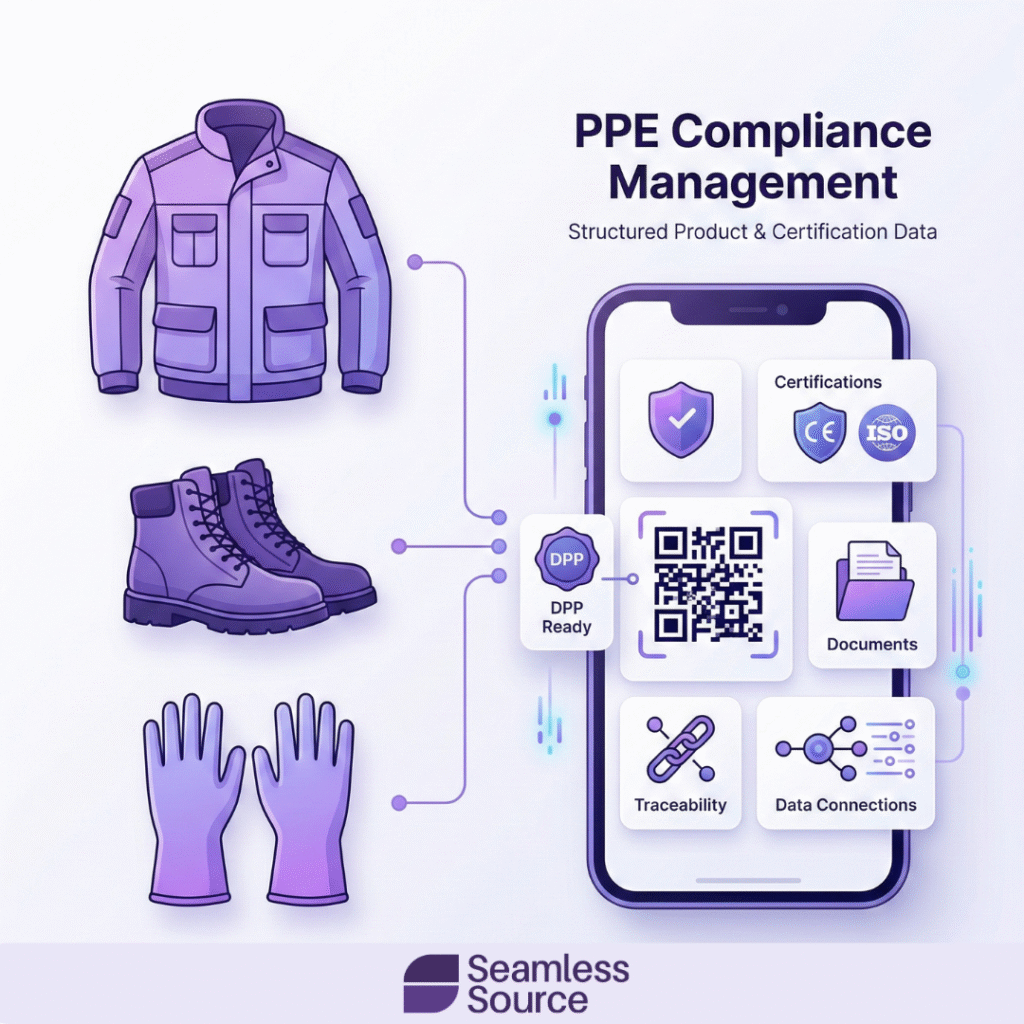
Every product becomes a structured record that connects:
• Materials and components
• Bills of materials
• Supplier information
• Certifications and test reports
• Product variants and specifications
• Packaging and regulatory data
This structure ensures that compliance information is not just stored, it is linked, traceable, and continuously usable across the business.
SKU-Level Certification Mapping
One of the biggest risks in PPE compliance is losing clarity between product variants and their certification coverage.
Seamless Source maps certifications directly to individual SKUs and product variants.
This enables:
• Clear visibility of which certifications apply to which products
• Reduced risk of incorrect claims
• Faster audit preparation
• Easier product updates without breaking compliance
When product specifications change, teams can immediately understand what certifications may be affected.
A Living Compliance System
Instead of static files stored in folders, compliance data becomes part of a living system.
Documents, certifications, materials, and suppliers are connected together in one place, allowing teams to:
• Track certification validity and expiry
• Maintain technical files more easily
• Access accurate product data instantly
• Preserve compliance knowledge beyond individual employees
For PPE businesses managing complex product ranges, this dramatically reduces operational risk.
Built for Digital Product Passports
As regulations evolve, structured product intelligence becomes essential.
Because data inside Seamless Source is already organised and connected, it can easily power:
• Digital Product Passports
• Distributor product information
• Internal compliance reviews
• Sustainability reporting
This means the same system that improves internal operations also prepares businesses for future regulatory requirements.
Your team shouldn’t spend hours managing compliance data
We’ll show you how PPE businesses bring product data, certifications, and documentation into one structured system reducing manual work and preparing for Digital Product Passports
Conclusion
The hidden risk of knowledge loss continues to threaten many PPE organisations.
Relying on spreadsheets, folders, and individual experience may appear manageable, but it creates fragile systems that struggle under regulatory pressure.
Modern PPE compliance management requires structured data, clear certification relationships, and a platform that preserves knowledge beyond individual employees.
Businesses that centralise their product intelligence not only reduce compliance risk but also build a stronger operational foundation for the future.
Frequently Asked Questions
What happens when PPE compliance data is fragmented?
Fragmented data leads to version confusion, missing documentation, and delays during regulatory audits.
How does a PPE compliance system prevent knowledge loss?
A centralised system preserves product intelligence in a structured environment accessible to the entire organisation.
What must be included in a PPE Technical File?
Technical files typically contain design documentation, risk assessments, testing reports, and manufacturing details retained for at least 10 years.
Why is homogeneity important for Category III PPE?
It ensures every manufactured unit matches the tested and certified design.
Why is SKU-level certification mapping important?
It links each variant directly to its certification, reducing configuration errors and ensuring regulatory clarity.