Ecodesign for Sustainable Products Regulation (ESPR): What Fashion and PPE Businesses Must Know About Digital Product Passports
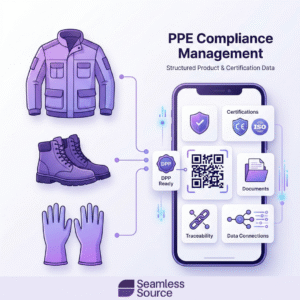
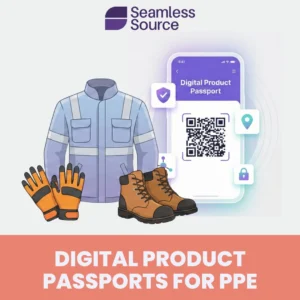
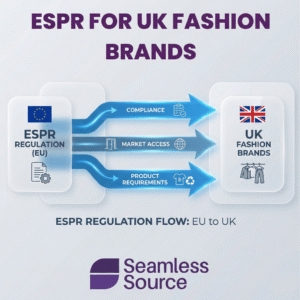
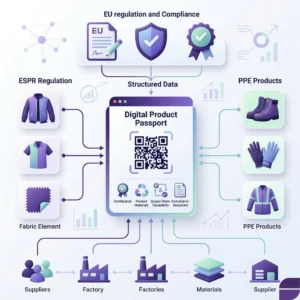
Sustainability regulation in the European Union is entering a new phase. What was once considered voluntary corporate responsibility is quickly becoming a mandatory regulatory framework for businesses placing products on the EU market. At the centre of this transformation is the Ecodesign for Sustainable Products Regulation (ESPR). ESPR aims to fundamentally improve how products are designed, manufactured, used, and disposed of. The regulation introduces requirements that focus on durability, repairability, recyclability, and environmental transparency. One of the most transformative mechanisms within ESPR is the Digital Product Passport (DPP). A Digital Product Passport acts as a digital identity for a product, containing structured data about materials, supply chain origins, environmental impact, and compliance documentation. For organisations operating in fashion and personal protective equipment (PPE) sectors, this shift introduces new expectations around supply chain transparency and product traceability. Understanding how ESPR works and how Digital Product Passports enable compliance is essential for businesses planning to continue selling products in the EU market. TL;DR The Ecodesign for Sustainable Products Regulation (ESPR) is a major EU regulation designed to make sustainable and circular products the standard across the European market. A core requirement is the Digital Product Passport (DPP), a structured digital record containing information about a product’s materials, supply chain, environmental impact, and compliance documentation. For fashion brands and PPE businesses, this means: Supply chains must become more transparent Product data must be structured and traceable Compliance documentation must be accessible Sustainability information must be verifiable Preparing for DPP requires structured product and supply chain data, not just attaching a QR code. Businesses that start early will be better positioned for ESPR requirements expected from 2027 onwards. Table of Contents What Is the Ecodesign for Sustainable Products Regulation (ESPR)? source: commission.europa.eu The Ecodesign for Sustainable Products Regulation (ESPR) is a major legislative initiative introduced by the European Union to accelerate the transition toward a circular economy. The regulation officially entered into force on 18 July 2024, replacing and expanding the earlier Ecodesign Directive. While the previous directive focused primarily on energy-related products, ESPR significantly expands the scope to cover almost all physical goods placed on the EU market, with a few exceptions such as food and medicinal products. The regulation aims to improve several sustainability characteristics of products, including: Durability and reliability Repairability and reuse Energy and resource efficiency Recycled material content Environmental footprint transparency By introducing these requirements, the European Union aims to increase circular material use, reduce environmental impact, and improve transparency across global supply chains. For industries such as fashion and PPE, which rely on complex international production networks, this regulation represents a significant shift toward greater traceability and accountability. What Is a Digital Product Passport (DPP)? A Digital Product Passport (DPP) is a structured digital record that stores essential information about a product throughout its lifecycle. Rather than product information being scattered across documents, emails, spreadsheets, and disconnected systems, the Digital Product Passport creates a single digital reference point linking critical product data. A Digital Product Passport typically includes information such as: Unique product identifiers Material composition Supplier and manufacturing facility information Environmental footprint metrics Compliance documentation and certifications Repair and recycling instructions A data carrier, such as a QR code, NFC tag, or RFID tag, links the physical product to its digital record. When scanned, stakeholders such as regulators, recyclers, retailers, or consumers can access relevant information based on their level of access. The Digital Product Passport therefore acts as a data infrastructure layer that supports transparency, circularity, and regulatory verification. Why Structuring Product Data Is the First Step Toward DPP? Although Digital Product Passports are often discussed as a technological solution, the biggest challenge for most organisations lies in preparing the underlying data. In many businesses today, product and supply chain information is fragmented across multiple sources: Spreadsheets used by sourcing teams Supplier emails and PDF documentation Certification records stored in shared drives ERP, PIM, or PLM systems holding partial product information This fragmentation makes it extremely difficult to build a reliable Digital Product Passport. Before a DPP can be implemented, businesses must ensure that product and supply chain data is structured, standardised, and traceable. Typical datasets required include: Material composition and raw materials Supplier identities and production facility locations Environmental footprint data Compliance certificates and testing reports Product care and disposal instructions Without structured data, maintaining Digital Product Passports at scale becomes nearly impossible. Businesses looking for a practical starting point can explore our guide on Digital Product Passport Implementation for Fashion Brands | 2026 How ESPR Impacts Fashion Brands? The fashion industry is one of the sectors most directly affected by ESPR due to its environmental footprint and complex supply chains. For fashion brands, the regulation introduces several new expectations. 01. Supply Chain Traceability Fashion products often pass through multiple production stages, including: Fibre production Yarn spinning Fabric manufacturing Dyeing and finishing Garment assembly Digital Product Passports help connect these stages into a single traceable record. Businesses looking for a practical explanation of this transition can explore: Digital Product Passport for Fashion | Practical DPP Guide for 2026 02. Textile Destruction Ban ESPR also introduces a ban on destroying unsold textiles and footwear for medium and large companies. Brands will be required to disclose the number and weight of unsold products they discard each year. This policy aims to encourage: Improved inventory management Resale programmes Recycling initiatives You can read more about these requirements in: ESPR for UK Fashion Brands: The Definitive Guide to EU Compliance, Digital Product Passports & the Textile Destruction Ban 2026 How ESPR Impacts PPE Businesses? For PPE businesses, ESPR introduces additional considerations related to compliance documentation and traceability. PPE products must meet strict safety requirements while also providing transparency regarding materials and lifecycle data. 01. Centralised Compliance Documentation Digital Product Passports can securely store documentation such as: CE certifications EN or ANSI compliance records Technical performance specifications Safety instructions and manuals Inspection and maintenance documentation Centralising this information ensures businesses remain audit-ready and compliant. More insights can be found in: Traceability in PPE: