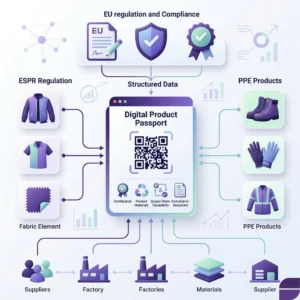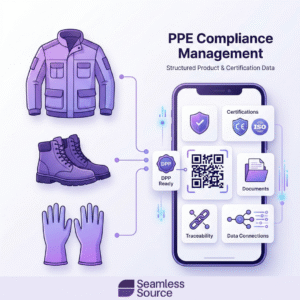
Digital Product Passport implementation can feel complex for fashion brands, especially when supplier data is fragmented and regulatory timelines are tight.
At Seamless Source, we’ve built a structured, fashion specific DPP implementation framework that helps brands move from data chaos to live, compliant Digital Product Passports in a short time period.
This guide explains how Seamless Source implements Digital Product Passports, step by step, from supplier mapping to going live with your first DPPs.
Table of Contents
What Is a Digital Product Passport Implementation?
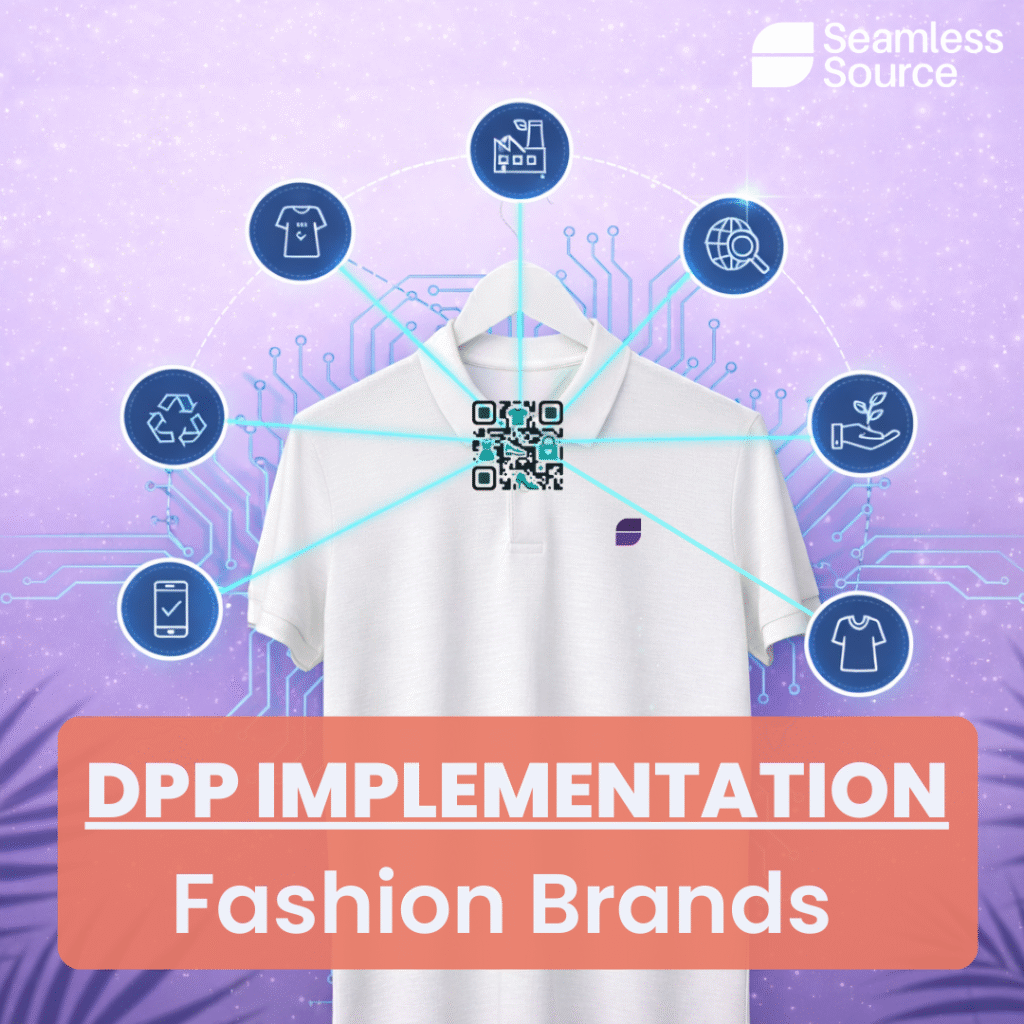
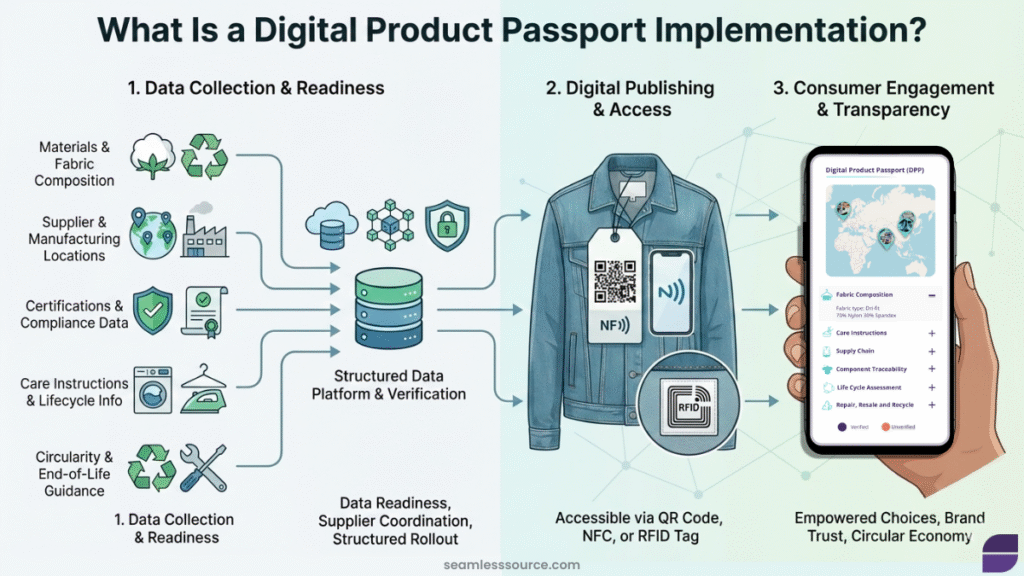
Digital Product Passport implementation is the process of collecting, structuring, verifying, and publishing product level data into a digital format that is accessible via QR code, NFC, or RFID tag.
For fashion brands, this includes:
- Materials and fabric composition
- Supplier and manufacturing locations
- Certifications and compliance data
- Care instructions and lifecycle information
- Circularity and end of life guidance
A successful implementation is not just about technology; it’s about data readiness, supplier coordination, and structured rollout.
Why Fashion Brands Struggle With DPP Implementation?
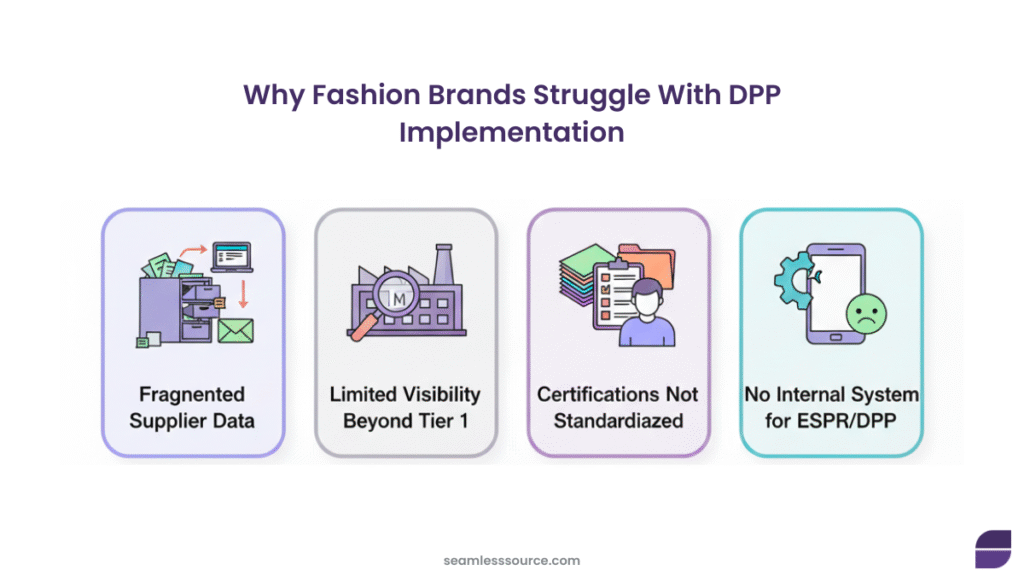
Most fashion brands face similar barriers when starting with Digital Product Passports:
- Supplier data stored across emails, spreadsheets, and PDFs
- Limited visibility beyond Tier 1 suppliers
- Certifications not standardised or centrally managed
- No internal system designed for ESPR or DPP requirements
Without a structured approach, DPP implementation becomes slow, expensive, and error-prone.
Seamless Source was designed specifically to remove these friction points.
Seamless Source 6 Steps DPP Implementation Framework
Seamless Source combines technology, process, and hands-on support to deliver Digital Product Passports that are practical, scalable, and compliance ready.
We don’t just provide a platform, we guide brands through implementation, handling the complexity while keeping teams focused on decision making, not data chasing.
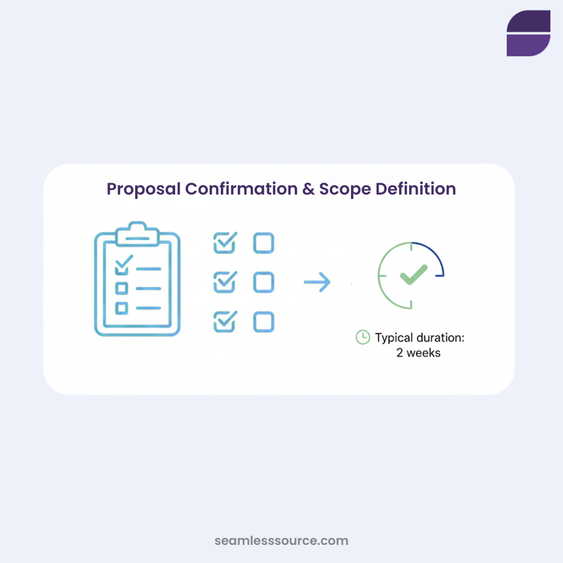
Step 1: DPP Readiness Audit
We start by defining:
- Number of products (styles)
- Supplier tiers involved
- Identify data gaps
- Target markets
- DPP objectives (compliance, transparency, storytelling)
Step 2: Supplier & Product Mapping
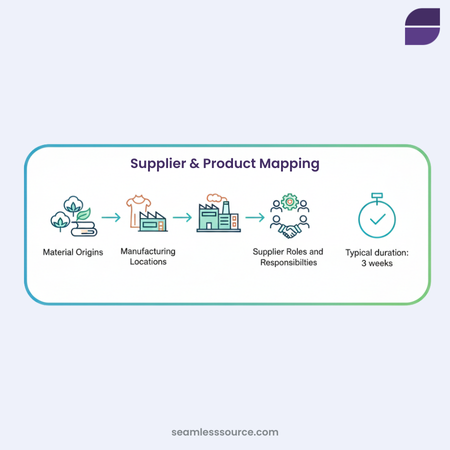
We map your supply chain from Tier 1 to Tier 3/4, identifying:
- Material origins
- Manufacturing locations
- Supplier roles and responsibilities
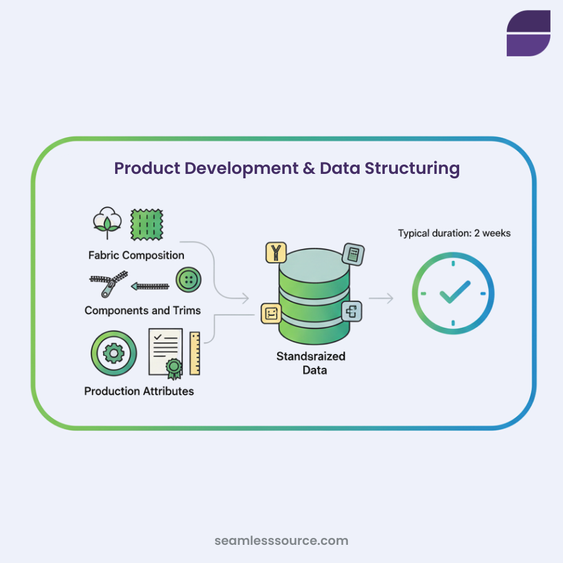
Step 3: Product Development & Data Structuring
Product data is structured into standardised formats:
- Fabric composition
- Components and trims
- Certifications and documents
- Production attributes
This ensures consistency across all DPPs.
Step 4: Implementing DPP on Physical Products
We generate:
- QR codes / NFC tags
- Digital product interfaces
- Secure hosted DPP views
Each product receives a digital identity.
⏱ Typical duration: 2 weeks
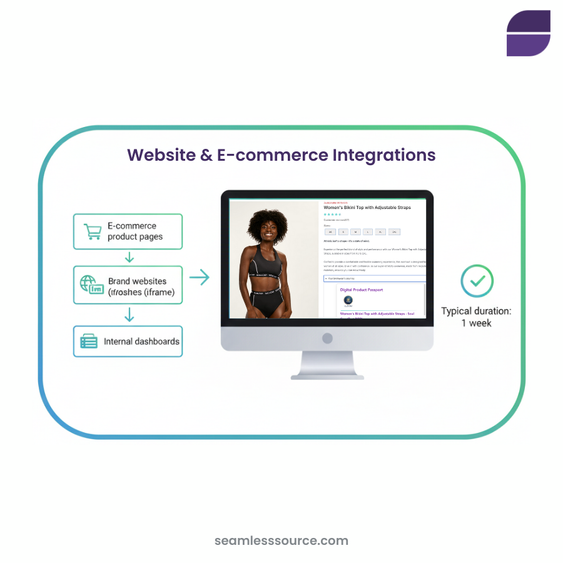
Step 5: Website & Platform Integration
DPPs are embedded into:
- E-commerce product pages
- Brand websites
- Internal dashboards
⏱ Typical duration: 1 week
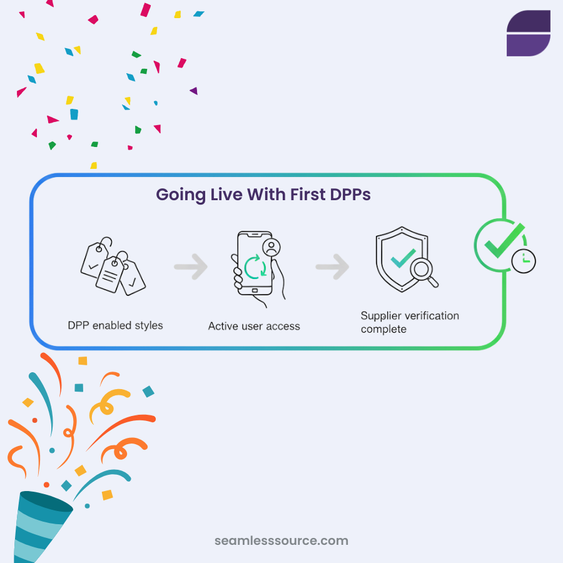
Step 6: Going Live With First DPPs
Brands go live with:
- DPP enabled styles
- Active user access
- Supplier verification complete
Digital Product Passport (DPP) Example
In practice, a Digital Product Passport can be delivered and accessed in multiple ways, depending on how and where a fashion brand wants customers and internal teams to interact with product data.
- QR code labels attached directly to the garment, hangtag, or care label
- NFC tags embedded into the product for tap-to-access experiences
- RFID tags used for inventory, logistics, and traceability use cases
- Website and e-commerce embeds using iframe integration
Below is an example of a Digital Product Passport delivered through:
- A QR code, typically printed on a garment label or hangtag
- An iframe-embedded DPP, displayed directly within a website or e-commerce platform

Technology & Key Features Behind Our DPPs
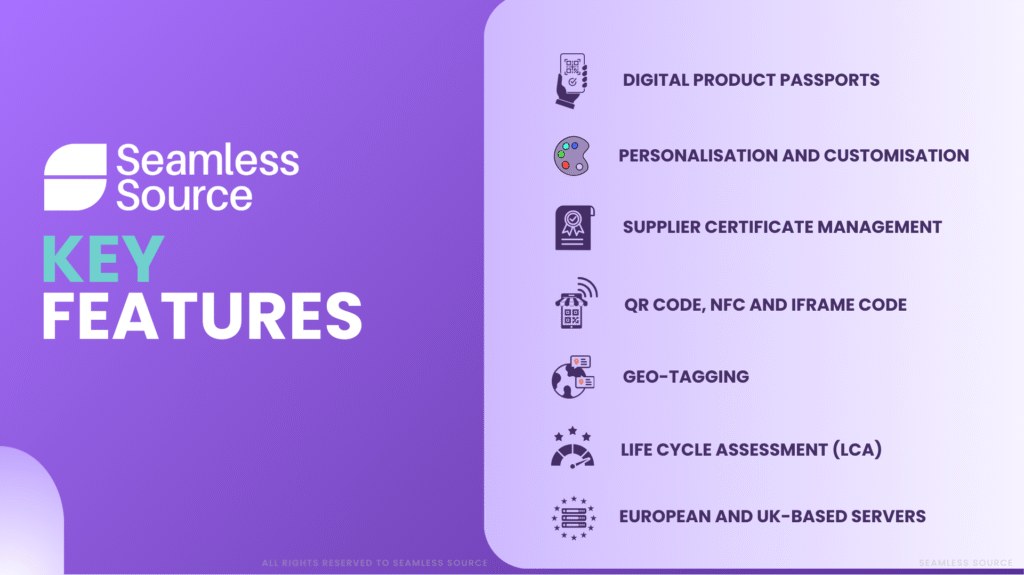
Seamless Source’s Digital Product Passports are built as a unified platform that combines traceability, compliance, and brand experience in one place.
Digital Product Passport Management
- Manage all Digital Product Passports from a single dashboard from pilot products to full collections with structured, verifiable product data accessible via QR code.
Personalisation & Customisation
- Customise each DPP to match your brand identity with colours, layouts, logos, and instructional content such as care guides or videos.
Supplier Certificate Management
- Centralise supplier certifications with automated expiry reminders and version control to ensure compliance data stays current and audit-ready.
QR Code, NFC & iFrame Integration
- Deploy DPPs through QR codes, NFC tags, or embedded iFrame views that connect seamlessly to e-commerce websites and product pages.
Geo-Tagging & Ground-Level Verification
- Verify manufacturing locations using geo-tagged data to support transparent, location-based supply chain validation.
Life Cycle Assessment (LCA) Insights
- Calculate and display emissions, resource consumption, and environmental impact data to support sustainability reporting and decision-making.
Secure EU & UK-Based Infrastructure
- All DPP data is hosted on secure European and UK-based servers, ensuring high standards of data privacy, security, and regulatory compliance.
Expected Results for Fashion Brands
Fashion brands implementing Digital Product Passports with Seamless Source move beyond compliance and gain measurable operational and commercial benefits.
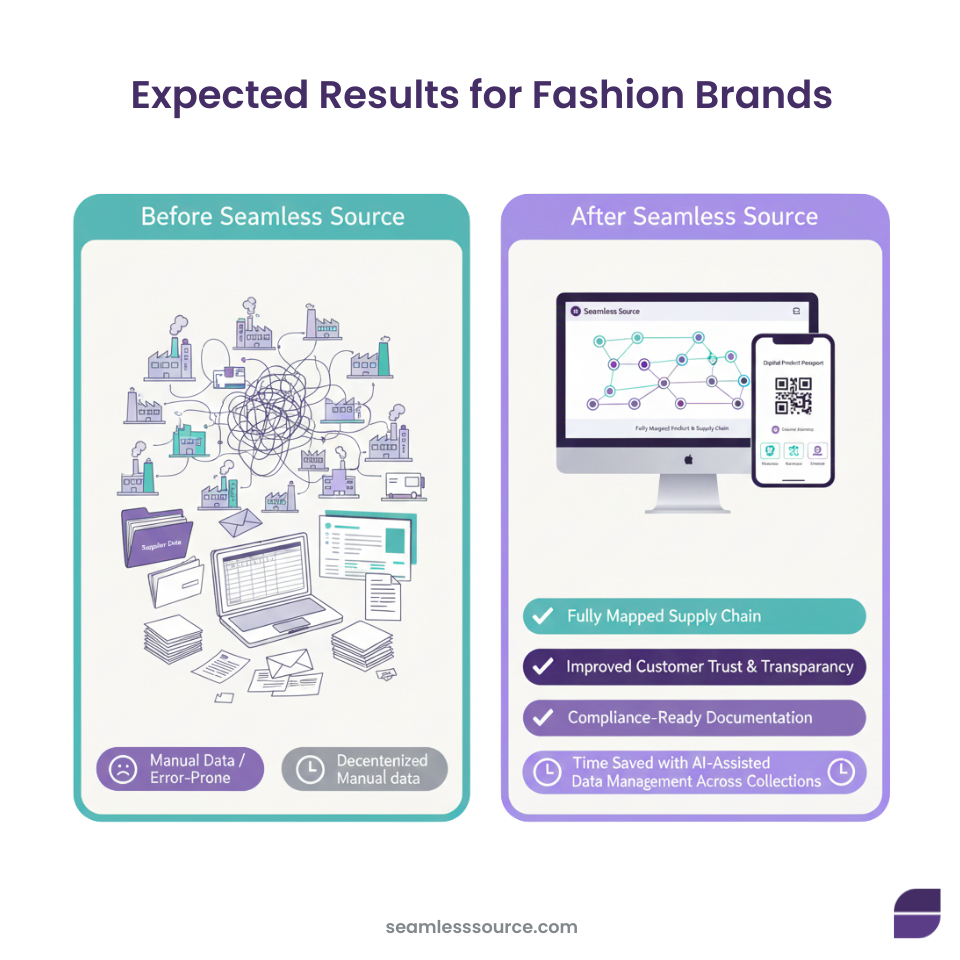
Fully Mapped Supply Chains
- Gain end to end visibility across Tier 1 to Tier 4 suppliers, with verified locations, processes, and material origins clearly documented.
Centralised Product & Supplier Data
- All product data, certifications, and supplier information are stored in one structured system eliminating spreadsheets, email trails, and data silos.
Compliance-Ready Documentation
- Prepare for EU ESPR and future regulations with standardised, audit-ready Digital Product Passports that support reporting, verification, and inspections.
Increased Customer Trust & Transparency
- Give customers instant access to verified product information via QR codes strengthening brand credibility and reducing greenwashing risk.
Time Saved with AI-Assisted Data Management
- Automate data extraction, validation, and organisation using AI tools, significantly reducing manual work for sustainability and operations teams.
Faster DPP Rollout Across Collections
- Launch DPPs for multiple styles efficiently using repeatable templates and scalable workflows.
Ready to Implement Your Digital Product Passports?
If you’re preparing for Digital Product Passports and want a clear, guided path to compliance, Seamless Source makes it simple.
Our experts assess your supply chain, review your product and supplier data, and deliver a practical DPP implementation roadmap within 4 days, no guesswork, no unnecessary complexity.
Frequently Asked Questions
Is Digital Product Passport implementation mandatory?
Digital Product Passports will become mandatory for certain product categories under EU ESPR, including textiles.
Do suppliers need new systems?
No. Seamless Source provides structured workflows for suppliers without complex setup.
Can we start with a pilot?
Yes. Most brands start with 3–5 styles.
Does Seamless Source manage verification?
Yes. We support onboarding, verification, and training.