Our Blog

Welcome to our Blog. Share your thoughts on our latest and trending posts

Search
All

Interview with CEO of Size Me Up AI Technology: Svilen Valentine

We had a talk with Svilen Valentine, co-founder and CEO of Size Me Up, a digital AI Technology company helping fashion retailers to provide the right size of garments for their customers to understand their business and their long term goals. A digital AI Technology tailor for online shoppers In this digital age, online shopping is convenient. Brands offering free return services has made it even easier, however, it comes with an environmental impact.  Hence, the app “size me up” aims to promote sustainable ways to purchase garments online. Size me up app is a new digital sizing tool that is an AI technology powered digital tailor for online shoppers, which helps the customer find their right size by just calculating measurements and uploading 2 photos, which saves the hassle of doing returns and reduces environmental impact at the same time. 1. Who are you and what is your business? My name is Svilen Valentine and I am one of the co-founders of Size Me Up. Our business is a SaaS platform which enables shoppers to get the right size of clothing by inputting two images of themselves (front + side) and their height (in cm or inches). In return, the shoppers receive their measurements (7 key body measurements) which are matched to the sizing chart of any retailer or article of clothing. To summarise, you should think of it as an AI technology powered digital tailor for retailers. 2. What is your role in the business? I am a co-founder and current CEO of Size Me Up. I would say being a co-founder means you do a bit of everything in the business. There is nothing I am not involved in and nothing that I do not give my input into. That is probably what I enjoy the most about Size Me Up. No two days are ever alike. I also have the pleasure of working with two of my best friends on a daily basis. 3.What sparked your interest in developing the ‘Size Me Up’ App? A few years ago (3 to be exact), my friend Yan and I were sitting around having a chat and one of us had an interview coming up. I think it was me. I did not want to go to the shop, so I thought there must be an alternative way to get a suit. I browsed a few different retailers online and noticed the complexity behind getting a good fitting suit. There were guides, charts and inputs galore, all way too complicated and time-consuming. What came next was a 3-day working session where we did research and reached out to our existing network looking into whether there was a company doing anything AI technology based. At the time, there were very few competitors in the space. That is when we decided to jump on the idea and began developing our own tech. 4. What is the mission of your company? I am going to answer this question in two parts, the mission of the team and the mission of the company. Team mission: We want to instil a mindset in our team and our customers that is based on two principles: Our product needs to do exactly what we say it does. For us right now, that means shoppers that use the Size Me Up mobile app will get the right size clothing. No excuses! Our product needs to be simple to use. We work rigorously to reduce steps, minimise clicks and ensure that our process for receiving the right size is as simple as it can be. Company Mission: Our mission is to generate a tangible benefit for the retailers we work for as well as their customers. However, its not about the money or revenue for us. The real benefit is a sustainable way of shopping. Size Me Up will help shoppers reduce the number of items they purchase and the number of returns they send back, which positively impacts the environment by ensuring a smaller carbon footprint. We want to show and educate shoppers that they do not have to purchase 5 sizes of the same item and send 4 back when shopping online. They can purchase 1 and know that it will fit them just right just by using our AI technology system. 5. Who are your customers? We currently have three small online retail brands that we work with on almost a daily basis. There are a few more that we are in conversation with and will begin integrating our system for their business within the next few months. We started actively approaching customers over the last two to three months. Before that, we were exclusively focused on building our technology. It took us about two and half years to get our AI-based tech to a place where we were comfortable in approaching potential customers. 6. What was your previous experience before starting your company? A variety really. Fields of experience: Sales, project management, programme management, business analysis, continuous improvement, customer experience, front-line, product design, some accounting and finance, some marketing and a few more. Industries: Start-ups, construction, utilities, and semi-conductor manufacturing and assembly. 7. What has been the biggest career highlight so far? This is a tough question. I have delivered digital projects across an 80 person team and numerous senior management level stakeholders and yet… I would say Size Me Up. It is extremely rewarding building something from the ground up with unproven AI technology in an industry where I have limited experience. We have had to establish a network of resources, a network of customers, understand the market, target our product, identify suitable mentorship, adapt our tech about a million times, and endlessly improve and troubleshoot. Although we are small, I cannot be any more proud of what we have achieved given our limited resources and team size. Each one of our team members is a warrior and they battle complex problems and issue on a daily basis. We are extremely adaptable


Read More »
All

Increased Traceability Within the Fashion Industry – Why Is It Important in the 21st Century?

Fashion Traceability Fashion traceability and sustainability have become massive topics of discussion and due to this, their impact has created the biggest challenges for the fashion industry in a very long time. There are many levels to this issue including the social, environmental and economical traceability of supply chains and factories and their overall carbon footprints. The major organisation protesting for traceability in the fashion industry is Fashion Revolution. Fashion Revolution’s most notable protest is through creating the social media hashtag ‘#whomademyclothes’ which allows consumers to ask fashion brands about the supply chain details of the products they own. This non-profit has developed the criteria for assessing brand and retailer transparency. This is called the FTI and assesses 250 of the world’s largest fashion brands according to what information they disclose about their social and environmental policies, practices and impacts, in their operations and supply chain. ‘The Index is a tool to push and incentivise the world’s largest fashion brands to be more transparent about their social and environmental efforts. Fashion Revolution believes that transparency is foundational to achieving systemic change in the global fashion industry, which is why we have been campaigning for it since 2014, and why we created this Index.’ Out of the 200 brands that Fashion Revolution has audited, there was an average score of 53 out of a possible 250 points. These results highlight the lack of transparency within the complex supply chain of a fashion company on a global scale. The Fashion Transparency Index (FTI) measures the following key areas: Policy and Commitments Governance Traceability Know, Show and Fix Spotlight Issues What are the issues that the FTI tackles? Fair Trade Well-being Living Wages Empowerment Gender Equality Business Accountability Sustainable livelihoods Good Working Conditions Environmental Sustainability Environmental Issues The environmental impact encompasses the lifecycle of a product, from the raw materials used in the manufacturing process to the disposal of the product. This takes into account the energy usage, water usage and air pollution involved in the lifecycle. Social The social impact considers the effects on the employees of the brand and throughout the supply chain regarding wages, well-being and working conditions. Also, the social impacts extend to the effects of the manufacturing processes on the well-being of those connected to it. For example, the effect on the dyeing process of a pair of jeans on the local water systems and people in that region. Economic The economic impact overlaps in terms of the living wages criteria. Meanwhile, some brands challenge the traditional mark-up price that brands and retailers enforce on products. For example, Everlane counteracts the traditional retail pricing system by showing the cost of the materials, hardware, labour, duties and transport with a lower markup. What details do brands need to include to score well on the FTI criteria? Details of manufacturers and suppliers including those related to raw materials Publish Company’s Sustainability teams contact details to enable the consumer to brand transparency Disclose steps the company is making to build sustainable business relationships with suppliers and manufacturers Environmental Impact Footprint Answer customers call to action on tracing their products Fashion Revolution doesn’t intend to simply call out fashion brands for their lack of traceability, but to support them in becoming more transparent and sustainable in their practices. What is holding back the fashion industry from complete traceability? The biggest issues for retailers and brands to trace their transparency is the supply chain The supply chain is unable to trace the source of raw materials The cost of implementing a tracing system The competitive strategy of keeping their suppliers and manufacturers secret If you are interested in the topic of sustainable fashion, check out our other blog posts including a guide to fashion certifications and how sustainable fashion renting truly is.

Read More »
All

Interview with Founder of THINKSTUDIO Wearable Technology: Tharindu

We  had a talk with Tharindu Athauda, founder and CEO of THINKSTUDIO, an entrepreneur, academic and consultant in the electronic textiles and wearable technology industry. 1. Who are you and what is your wearable technology business? I’m Tharindu Athauda who is an entrepreneur in the e-textile and wearable technology fields. I strongly believe in open-innovation principles and the mutual benefits it provides to collaborators and partners. What I try to do is to develop a consultation platform which provides ideation, tech know-how, validation of MVP (Minimum viable product) and networking for the startups and SMEs in the e-textile field. 2. What prompted your decision to become an entrepreneur after being in the industry and academia? Well, I was thinking about this idea for a while I was working for a multinational company around 2014. It was clear that e-textile and wearable technology is an emerging trend and there is massive market potential where the electronics become smaller and apparel becomes smarter. I believe academic credentials will a boost when you think of a consultancy as a profession. There is so much opportunity to serve in both industry and academic research. I also believe that continuous improvement is one way to stay in the game. Therefore, while working on the consultancy venture, I do work in parallel with industry and academic to stay up to date with tech trends and to experiment my own ideas. 3. Who are your clients? I consider e-textile and wearable technology start-ups as my best interests. 4. What services do you offer? – Collaborative ideation to define what’s possible – Develop technology strategy and technology framework – Development of MVP and building eco system for the venture through partner networks – Supply chain and client management – Data management and data mining 5. What sets your consultancy company apart? – 10+ industry experience in textiles, apparel product development and wearable technology – Working experience with likely minded apparel brands and startups in US, Europe and Easy Asia – Systematic tech scouting with the support of experienced team in the e-textile fields – Undertake solution from design to development and optimise for mass deployment – Data management support on top of apparel support – Help you to develop sustainable, earth-friendly apparel solutions. 6. What is the best thing about your job? Its fun and it always feels satisfied! I love speaking to people. It may be a casual chat or may be a serious business discussion. At the end, I’m happy solving problems! 7. What skills are essential for your role? – Experience in understanding textile electronic interfaces – Apparel product development – Familiarity with testing, quality protocols and aesthetics – Critical thinking and deep analysis skills 8. What excites you about the textile innovation industry? It’s evolving. Fashion industry sets the phase of overall textile industry and consumer demand pushes the textile innovation to do more, do better! There is a bigger acceptance for e-textiles as a trend setter but still has its own limitations to maintain stability in mass market. This is where the innovation can play a vital role. Data is the new ear of any industry, even for textiles. Having access to sustainable electronics-textile solutions, make the life much easier for data scientists to access supply chain, consumer data, buying patterns and sales. The very same solution can also give the vital information about consumer vital signs, physical and psychological comfort to consumers which aspire sports, health and lifestyle applications. 9. What piece of advice would you have given to your younger self? – Work hard and work smart – Always believe in you and your guts – Its good to have plan B and C! 10. What are your plans for the future? – Continue to experiment and never stop learning – Experience is vital for survival – Continue to do what I like to do! – Collaborate and conquer – Mutual Vision. Partners in Growth! If you’re looking to contact Tharindu,  you can contact him via: Linkedin: https://www.linkedin.com/in/tharindu-athauda-a8161322/, Thinkstudio LinkedIn: https://www.linkedin.com/company/thinkstudioconsultants/?viewAsMember=true, Website : https://tharinduathauda.com/. If you want help starting your own wearable technology or e-textile brand or are a fashion designer who wants to know more about these fields, please contact us at @Chanodil.

Read More »
All

Sustainable Packaging – Discover If It Is a Fad or the Future

Sustainability issues are affecting every industry and leading next their business ventures. Sustainable packaging is currently on the top of their lists – but what are the solutions for fashion companies to deal with their waste? Consumers are expecting brands to be more sustainable, however many find it confusing to recognise how brands are being more sustainable. For instance, Mintel (2018) reported that 48% of clothing consumers would choose a brand that is more environmentally sustainable over a less sustainable brand. Meanwhile, the gain in sustainable packaging initiatives is saving companies millions of pounds. The mega-brand retailer Walmart concluded that they saved ‘$3.5 million in transportation costs’ in one year by using sustainable packaging in their children’s wear (Wilson,2018). This shows that sustainable initiatives can have a profound economic benefit to companies by forcing innovation. According to various researchers in the manufacturing and sustainable packaging industry, the retailers are in a ‘privileged position’ to reduce their environmental impacts in terms of packaging (Journal of Cleaner Production, 2018). This is because they engage both the suppliers of the packaging and the end-of-use packaging consumers. Therefore, they have the opportunity to initiate and develop solutions to tackle this issue. What is sustainable packaging? Sustainable packaging relates to the production process involved in the manufacturing of the packaging as well as material content. GreenBlue, an environmental sustainability organisation which is part of the Sustainable Packaging Coalition (Wilson,2018) has developed a comprehensive definition of sustainable packaging. The definition: Materials are safe for individuals and communities relating to the entire product lifecycle Suitable for the intended use Cost-efficient for the market Produced in alignment with cleaner production guidelines The materials can be reused or recycled multiple times The material can be used for other biological or industrial closed-loop cycles Utilises materials and energy usage A good place for brands to start is to use a guide such as Recycled Content, which gives step by step information about the recycling options of different materials such as plastics, paper and cardboard. What are the solutions for sustainable packaging? There is a growing market for sustainable packaging suppliers. The way to ensure the sustainability claims are more than ‘greenwashing’ is to check for the manufacturer’s sustainability certifications. Weavabel is a packaging manufacturer based in the UK. This company has a range sustainable packaging solutions and sustainability certifications; OEKO-TEX Standard 100, Forest Stewardship Council, Global Organic Textile Standard and Global Recycled Standard. Weavabel is a well-known brand in the fashion industry with a wide-ranging portfolio of clients. Weavable has a range of sustainable alternatives to traditional plastic poly bags. The alternative materials provided for their poly bags are: Green PE (Sugar Cane) 100% Recycled Low-density Polyethylene(LDPE) 100% Low-density Polyethylene (LDPE) with D2W Additive Cornstarch Repack Repack is packaging recycling option for brands that allows them to reward their customers for reusing and returning the Repack packaging. The diagram below shows the process that Repack uses. This is a reusable sustainable package option that intends to minimise waste. They work with a range of brands from different industries. Noissue Noissue is a sustainable packaging supplier that allows their users to add their custom designs to the surface design of the packaging. They are certified by the Eco-packaging Alliance which supports reforestation. They work with many brands from small to big, with a low minimum order quantity. These examples are a small sample of just hundreds of options available – there are countless different places with different options for sustainable packaging which can help transform businesses and prepare them for the future of sustainable fashion. If you would like to find out more about sustainability within the industry check out our blog. You can also visit our platform if you are thinking of creating a sustainable range, and we will help you with information such as this to make the most conscious decisions for your brand.

Read More »
All

Interview with Freelance Designer: Natalie Yagi

We had a talk with Natalie Yagi the founder and CEO of Points of Measure, a free education platform for freelance designers, students, and aspiring designers to get real, practical knowledge for their fashion careers. Points of Measure fills the gap in the market for such a valuable resource to help freelance designers navigate their careers. 1.Who are you and what is your business? My name is Natalie Yagi. I am a Garment Technologist and Designer specializing in technical outerwear and couture. I am the founder and CEO of Points of Measure and Nascent. Points of Measure started as a place for me to display my freelance design portfolio but has since transformed into a free education platform for fashion professionals and freelance designers looking for guidance. Nascent is my demi-couture brand which focuses on gowns and accessories. Each piece is made from 100% hand-dyed silk. Designs are freehand painted by me to create wearable textile art. I pattern and construct each gown using couture techniques. 2.What made you decide to start ‘ Points of Measure’? Points of Measure started as a place for me to display my freelance design portfolio. As I continued to work with clients I realised they needed some basic education on the design process for me to be able to fully serve them. So, I started creating educational blog posts that would be supplemental to my custom services. Eventually, the focus for my mission shifted from custom services to education for Fashion Professionals. I began to see that there was a big hole in the market for freelance designers, students, and aspiring designers to get real, practical knowledge for their fashion careers. As a young designer coming up in the industry, you really don’t have many people helping you up the ladder. I wanted Points of Measure to change that, to be that support system for freelance designers starting their careers. 3. What is the vision for your company? The big picture for Points of Measure is to become a leading platform for Fashion Education and resources. I ultimately want it to become a place where new and experienced designers come to reference information, continue their education, and find new resources. 4.What services or products do you offer for freelance designers? Right now, I offer 2 services. A “Design Your Collection” package is an all-inclusive package for the design and development of a full collection. I also offer one-on-one consultations to answer questions and give advice. However, I am slowly transitioning out of custom services and focusing more on providing my audience with value through my free education. To supplement my education, I’ve created several digital resources which act as support for those designers who want to DIY their way through the design process. 5. What is the best thing about being a freelance designer? This answer changes for me so often! The very fact that I own my own business is the best thing in the world to me, it’s what I’ve always dreamed of. Currently, one of the best things about my job is the messages I get from my audience. As I’ve been transitioning out of custom services and into free education it has definitely been hard. As you can imagine, a large part of my income has gone down. However, when an audience member messages me that I’ve changed their life and given them the tools they need to follow their dreams… that makes all of it worth it. I feel so blessed to be touching so many lives. My goal was to help one person and I’ve helped so many more than that already. I’m just getting started. 6. Can you tell us a bit more about your experience in the fashion industry, in terms of your roles as a designer and garment technologist? I actually started my career as a muralist! I eventually realised that I loved making art for myself more than for my clients, so I wanted to find a way that I could serve clients and still be fulfilled in what I was creating. I realised that fashion design was a great way to do that. I’d always loved making my own clothes and designs growing up. So, I got my BA degree in Apparel Design as well as a BA in Accounting (so I would understand the business and financial side). My first “real” experience was interning for a local couture label, Luly Yang Couture. I was eventually hired on as a Bridal Consultant there and learned so much about the bridal and evening wear industry. I was very fortunate to get a behind-the-scenes look into couture construction and design. Through my University, I was connected with many fashion shows (Vogue, Neiman Marcus, and more) where I worked backstage and got to experience luxurious garment construction. The goal was always to start my own label, but with my impending graduation, I knew I needed to land an industry job to get some more experience. I went on to work as an Assistant Technical Designer for one of the largest promotional goods companies in the US. After a while, I transitioned to an Illustrator role at that same company (which was sort of like a mix between Technical Designer and Designer) and was exposed to even more garment categories. I worked on products for big names like New Era, Ogio, and Nike. At one time I was managing 7 brands and over 20 garment categories. I definitely got the experience I was looking for! So, I struck out on my own. I had been freelancing on the side and now was taking it full time. I’ve worked with hundreds of clients in over 17 different countries. Now, I focus on relaying everything I’ve learned through my educational series and get to talk with fashion students all over the world. Plus, I have been working for over 5 years on the launch of my own brand which will be launching, finally, this year. 7. What skills are

Read More »
All

How to Build a Fashion E-commerce Business

Fashion e-commerce is essentially on an online store as an alternative to the good old bricks and mortar shop! However, it is a highly competitive online business, which means it is important to ensure yours stands out and is marketed exceptionally well. You can do this by assessing what your target customers want and knowing the tips and tricks of the trade for both fashion and online e-commerce business. 1. Identifying your Product Of course, the first step to building an e-commerce business is to know what product you’re selling. This is a process that will take fairly long as you will need to target the consumer for your product, analyse what will be your best-seller and identify your surrounding markets and competitors. Once you have mastered your fashion products, in theory you would have found a suitable manufacturer for you, for more information on this, check out our article ‘How to pick a Garment Manufacturer’. 2. Doing your Research and Creating your Fashion Marketing Plan The next big step is to undertake in-depth research of your competitors, this will help to formulate your business/ marketing plan. A business plan is ultimately a road map that helps bring your ideas and thoughts together all in one very detailed file. You will have information regarding your customer profile, your finance and profits, your promotional plans, your contacts, your aims and objectives, your social media tactics and so on. Ensure you make it as detailed as possible. To find out more information on this, check out our article ‘How to Make a Marketing Plan for your Fashion Business’. 3. Bringing your Fashion Business to Life At this stage, presumably you will have at least an idea of your fashion brand name and logo. If not, you will need to ensure you have mastered the name of the brand, the logo for it and create a ‘slogan’ and ‘about us’ written piece. If you’re not as savvy on Adobe Photoshop, you may want to contact a graphic designer to help you create your fashion logo for you. Another top tip, when you have created content and material for the creation of your fashion brand, ensure you have everything backed up to a hard drive- this will help avoid any future problems. Also ensure that your logo is in PNG format for when you upload it to your online store, as this looks more professional. 4. Getting to Depths with SEO SEO (search engine optimisation) is essential to know before starting your online store. This will help structure your pages on your website for Google and other search engines. By mastering the likes of SEO, you will give your brand a clearer and admirable recognition on all top search engine platforms. If you want to find out more information of what SEO is, have a read through our article ‘What is SEO and How can it Help your Fashion Brand?’- 5. Building your Online Store (E-commerce Site) With a clear understanding of your fashion brand ethos, product, market and SEO, you are now ready to start creating your online store! Online Web Builders You may choose an online store builder to do this. You will firstly need to sign up to an ecommerce plan to connect to ‘payment processors’. This will allow you to take payments from customers when you sell your fashion products online. The great thing about online store builders is that a lot of it is set up for you (such as boxes, buttons and layout), therefore you are unlikely to face technical issues. However, depending on your aim and business plan, you may want more creative freedom. Another pro of online stores, is that they provide you an SSL certificate. This certificate provides secure communications between your fashion website and your customers internet browser. Essentially, it means that all credit card transactions and data transfers are safe. Choosing a Plan Most website builders will have a range of plans for you, all of which offer different pros. The more premium the plan, the more options you will have regarding templates, storage and the ability to get rid of the website builders logo ruining your web page. The more you spend, the more you get and always suggest going for the best packages. 6. Choosing a Domain It is vital that you have your own domain name paid for, that represents your brand. This looks much more professional and it means you can take full ownership for it. Most of the time, you are able to purchase your own domain name through the website builder that you choose, but alternatively you can purchase it through a third party. Get Creating Once you have mastered what website builder you want and domain name you purchase, you can get to the fun creative part! This includes choosing the right template for you, uploading your logo and all of your products alongside the product information. With this in mind, some top tips we suggest you take on board is that you keep your brand ethos throughout the website- too many changes may make it look unprofessional and untrustworthy. We also suggest keeping the layout clean, especially with your product page. Images need to be clear and have a ‘zoom’ function so that customers can get a close up view of the product for small detail. Considering creating your website using a grid format, this is so that you can ensure everything is spaced out evenly and this will overall make it look more professional and welcoming to the eye. Information regarding the product is also very important. This will include the fabric it is made from, the sizes available, the size the model is wearing, a description of the colour, style advice and so on. 7. Final Steps As mentioned before, undertaking SEO tools is important. Depending on the web format you are using, you will need to mention keywords that relate to your brand. Entering them in meta description but also your links and tags is important, this will ensure you come up near the top on search engines. For example, if you are producing an online swimwear store, you may use keywords such as ‘swimwear’, ‘bikini’s’, ‘swimsuits’. Cross linking is also very important. To do this, ensure your pages link back to one another (i.e having a link back to

Read More »
All

Different International Shipping Methods for your Fashion Business

You’ve mastered your fashion brands look and feel, created some amazing fashion designs and have sent them off to a garment manufacturer overseas, but it is now time to think about the different international shipping methods and it is also important to know certain abbreviations to communicate effectively with your providers overseas. In this article, we are going to highlight certain terminologies, as well as tell you the best ways to order your product samples. You may be thinking to yourself, why is it important to know these shipping abbreviations? Well my friend, if you were to use a wrong term, this could make your first order a huge disaster. You’ll risk being charged unexpected charges which could essentially then ruin any ‘profit’ you’d want to make from your fashion business. Therefore, it is massively important to learn abbreviations such as CNF, CIF, FOB and so on. Knowing the meaning of each one will also help you to better-decide what method is best for your fashion business. One thing you need to consider when reading this article, is that each shipping method is great and each one also financially depends on what you’re ordering and how much you’re spending. Learning about different international shipping methods can be a grey area, so it is good to do an in-depth research beforehand. In this article, we will go into detail to help you shape your decision for your choice of shipping method; please note that we will be talking about shipping methods when dealing with suppliers from China! 1. FOB A popular term used in the world of shipping is FOB. This is ‘Free on Board’ or some will say ‘Freight on Board’. This is essentially the ‘default’ pricing used when dealing with suppliers in East Asia. FOB covers the cost of the product, the local exporting fees and customers, and the delivery of your order to the nearest convenient port. Remember, this price will not cover the shipping from China to the UK, as well as the insurance of the shipment and VAT/import duty fees, so make sure you calculate all this on top into your financial plan. FOB will usually be accompanied by another word, such as FBO Ningbo. Ningbo is a city in China, so when you see a term like ‘FOB Ningbo’, it will mean that this is the place that the supplier will deliver your order to. There are a ton of different ports in China, so it will all depends on the suppliers location, and they will most likely go to the closest port to them. If you need your supplier to send your fashion products to a different port, you are allowed to request this, but this might add to your costings. FOB pricing is used a lot in China, because traditionally, most of the goods were shipped via boat. However, it recent affairs, due to established marketplaces such as eBay and Amazon, the situation has changed as there are so many different alternatives people can use, as people can now also import smaller orders. On a side note, you need to remember that you may want to use FOB pricing with your supplier, but this will depend on the size and weight of your order. If you were to use sea freight or air freight, then FOB is ideal. However, if your order is a lot smaller, it is probably best to use a delivery service or use EXW instead. 2. EXW EXW stands for ‘Ex-Works’. It means the cost of the production – so it is fairly simple to get your head around this terminology! No shipping costs, export costs, custom fees and so on are included in this price. EXW is still a strategy you should consider. You can consider the other pricing terms when using a courier shipping method for your order. When we say ‘courier shipping’ we refer to the faster air courier shipping method, often serviced by companies such as DHL and UPS. Delivery from China using one of these couriers takes around 4-6 working days. The only important thing you need to factor in, is the expense, as the courier shipments are fairly expensive, so they’re better suited for smaller items and are convenient if you have sample orders. If this is a route you would consider for your fashion business, then it is best to ask your supplier for the EXW price and get them to also give you a quote on the courier shipping, this way, you can work out and manage your finances better. In this case, you need to ensure you have a good and honest connection with your supplier (which Seamless Source will reassure), as some suppliers can overcharge you on the shipping fees. Therefore, to avoid this happening, get quotes from 3 or 4 suppliers and compare them. A great reason for using EXW and courier shipping, is that you will not have to deal with the local customers clearance procedure. The courier company you choose will send a VAT invoice, import duty and a custom clearance fee through to you in regards to this – so you can be better prepared and having clarity of your costings all the way through! 3. CIF / CNF CIF stands for ‘Cost, Insurance and Freight’ whereas CNF is similar but it does not include insurance, therefore it stands for ‘Cost and Freight’. For CIF, the price includes sea freight charges and insurance to deliver your fashion products to the nearest port. But after that, it does not cover anything, therefore you will need to find a shipping method from the port. CNF, as mentioned before, is very similar but it does not have insurance. Your supplier may quote you a CBF Felixstowe price, which means the price should include the shipping on your items through sea freight, to the nearest Felixstowe port. You will then have to organise customs clearance and delivery to the place your fashion products need to be delivered to.

Read More »
All

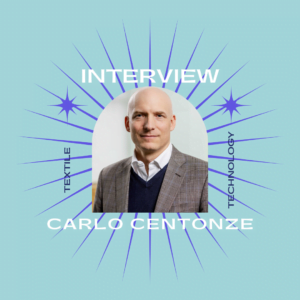
Interview with CEO of HEIQ Textile Technology: Carlo Centonze

We have had a talk with Carlo Centonze, CEO of HEIQ, a textile technology and innovation company based in Switzerland. HEIQ has developed the textile technology Viroblock NPJO3, a  textile treatment designed to prevent the spread of viruses and infections such as the covid-19. This textile technology has the potential to have a profoundly positive impact on the world at this time, with the outbreak of this virus. 1. Who are you and what is your business? I studied Biology and Forest Engineering at the Swiss Federal Institute of Technology ETH Zurich. I earned my Executive MBA at the University of St.Gallen. After my service as an army pilot I started my professional career as co-founder of the ETH Spin-off Myclimate, today one of the world’s leading providers of carbon offsetting measures. I am the co-founder of HeiQ together with Dr. Murray Height. Since 2004, I served HeiQ as CEO, developing the firm from a two-employee company to a 85 employees company. I am also the chairman of ECSA AG, the 107 year old chemical trading family company with 280 employees. 2. What was your previous experience before founding HeiQ? Co-founder of myclimate.org Myclimate is a partner for effective climate protection – both locally and globally. The Swiss Non-​Profit Organisation wants to shape the future together with its partners through consultation, education and climate protection projects. myclimate pursues this as a science-​based and business-​orientated non-​profit organisation. 3. What is the mission of your company? We believe through perfecting the everyday products of textiles, we are able to improve the lives of billions of people, including not only the end users but also those in different parts of the value chain. Our textile technology focus on making textiles more functional (such as the latest innovation HeiQ Viroblock NPJ03 which adds an antiviral function to textiles), more comfortable and more sustainable. Greener, more sustainable chemistry and new processes that help the mills use less water and achieve more output will give them the economic benefits also to improve their families’ lives in many ways outside of the textile world. 4. HeiQ textile technology has developed a solution for preventing the spread of covid-19. Could you tell us more about the HeiQ Viroblock NPJ03 and how it works? HeiQ Viroblock NPJ03 is a combination of HeiQ’s vesicle & silver technology. The HeiQ vesicle technology targets lipid-enveloped viruses, such as covid- 19 (note: According to the CDC, there are seven kinds of commonly known human coronaviruses, and 229E and Covid-19 are two of them.), providing rapid virus destruction, while the HeiQ silver technology inhibits the replication of both bacteria and deactivates viruses. End use: Single-use protective medical fabrics, e.g. used for face masks, air filters, medical gowns, curtains, drapes, etc. For all fiber types, especially non-wovens. Face masks treated with HeiQ Viroblock NPJ03 have proved to be effective against human covid-19 (>99.99% reduction of virus infectivity). A unique combination of vesicle and silver technologies, the HeiQ Viroblock NPJ03 textile treatment is designed to effectively reduce virus and bacteria infectivity on contact. Face masks treated with HeiQ Viroblock NPJ03 show significantly improved reduction in covid-19 infectivity compared to untreated control masks. 5. When did you begin your research on developing such a product? We had created the technological concept previously, but business disappeared quickly after the SARS crisis was over. The technology we had developed was shelved but not forgotten. So, when the 2019 novel covid-19 broke out, we were able to react very quickly. It took us three months to get everything back up and running as a supply chain, but we were able to respond. 6. What are your thoughts on this innovation, which could save countless lives?` At the moment, the key priority for HeiQ is the medical industry, with the product best suited to single-use non-woven fabrics used for face masks, air filters and curtains and so on. We have just launched the scaling up, so we are giving maximum priority to everything that is going to support our healthcare workers. Once we get enough volumes to the medical industry, which will be in a couple of weeks, we will broaden the scope to allow other applications, for example normal textiles. We are confident that we have the potential to achieve more protection in public spaces by making sure the virus is deactivated quickly on a textile surface. Today the virus can survive 1-2 days on a textile surface, so you’re basically bringing the virus home on your textile, and there’s always a risk that you’ll touch the textile somewhere and then don’t wash your hands properly before you change your outdoor clothing to indoor clothing, for instance. Then, there’s always the risk that you’ll touch your face and get infected that way. That’s exactly the risk that we want to mitigate. We want to make the textile surface such that the virus and bacteria are deactivated immediately in a short time – and we’re talking minutes. 7. Is this solution available to be used now? The response has been overwhelming; my team is struggling to cope and is putting in the extra hours, working night shifts. It’s a great response by everybody to try to help. That’s why we had to prioritise the medical industry, and we’re running according to that ethical principle that we’re pursuing. We started to produce tonnes this week and are scaling up as fast as we can. 8. What organisations is your company working with, to develop such innovations? HeiQ has an internal product development team of 12 chemists and achieves its research objectives primarily through a boundless research network with engaged partnership with researchers at 15 universities and institutes around the world. Today dozens of PhD’s work on HeiQ projects and are added brains to our own development team. Among the eight members of our scientific advisory board, there is Dr. Pelet who is a virologist and has contributed a lot of his knowledge to accelerate the development of this technology. Almost 80%

Read More »
All

12 Tips for Working Remotely in the Fashion Industry

The post COVID-19 pandemic has normalised work from home and remote working. It is the new normal and it is here to stay and many companies are adapting to the hybrid lifestyle with having the flexible to work from home and office. This may also seem like it’s giving us freedom. However, there are various obstacles to overcome that will ease the working transition. Here are 12 tips that should definitely help while you are adapting to the new normalised office lifestyle. 1. Sleep No, it doesn’t mean sleep all day. We still have to do work. If we go to sleep and wake up at a regular time each day, it will prevent us from listening to the call of sofa to have a ‘quick nap’. 2. Have a morning routine Whether your morning begins with a cup of coffee or a full English breakfast. The time to relax is necessary to prepare yourself for the day ahead. Step out from your bed into your office, is unlikely to help with your work morale or productivity. 3. Separate your Spaces The environment does affect your behaviour. Spending all day in bed working will only lead to frustration. The best approach is to set up a separate workspace, which is quiet and comfortable. This ensures you have at least your bed to escape from work and relax, especially in cases where you are not allowed to leave the house. 4. Take a few breaks – Use a Pomodoro timer if necessary to remind you to take a break. – Breaks are allowed. Take advantage of it. This means you can make yourself break time treats in the comfort of your own kitchen. – Take your full hour lunch break. This time is needed to switch off from your work. – Another bonus about working from home, you can eat a hot home-cooked lunch. – Say Goodbye to sandwiches. For some, the family could actually use the dining room to eat together. 5.Exercise Exercise helps to maintain your immune system and fight stress associated with quarantine. There are countless of online workouts to choose from. 6.Socialise This is probably one of the most important to protect your mental health in social isolation situations. This could be simply by ringing or video calling your friends during your breaks. 7. Get dressed You may not need to go to the office, but you still need to get into the mind frame of working. Getting dressed may actually make you feel more ready for the workday. Avoid pyjamas. Remember ‘No Naps’. 8. Set your Hours Working from home does enable you to set your own hours, but no matter when you choose, you still have to do the work. Have set working hours whether that is 9-5, probably a time connected to your usual work routine. This will make for an easier adjustment. This will help to prevent under or overwork stress. Structure is essential. 9. Turn off Notifications ‘Out of sight and Out of mind’ is true when it comes to social media notifications. If you wouldn’t do it in the office, then you should do it when working from home. 10. Plan your Evenings Plan something fun for your evening to do as a reward for finishing your work. This can be as watching your favourite new Netflix series or starting the personal project you have been putting off for a while. 11. Listen to Music Maybe you’re used to a lively work environment with all your colleagues in the background. Listening to some music may help to break the silence and focus. 12. Go outside Go outside for a walk. Obviously, this depends on where in the world you are and whether you are restricted from doing so. Just stepping outside your front door could be useful to clear your head.  

Read More »