Our Blog

Welcome to our Blog. Share your thoughts on our latest and trending posts

Search
All

Different International Shipping Methods for your Fashion Business

You’ve mastered your fashion brands look and feel, created some amazing fashion designs and have sent them off to a garment manufacturer overseas, but it is now time to think about the different international shipping methods and it is also important to know certain abbreviations to communicate effectively with your providers overseas. In this article, we are going to highlight certain terminologies, as well as tell you the best ways to order your product samples. You may be thinking to yourself, why is it important to know these shipping abbreviations? Well my friend, if you were to use a wrong term, this could make your first order a huge disaster. You’ll risk being charged unexpected charges which could essentially then ruin any ‘profit’ you’d want to make from your fashion business. Therefore, it is massively important to learn abbreviations such as CNF, CIF, FOB and so on. Knowing the meaning of each one will also help you to better-decide what method is best for your fashion business. One thing you need to consider when reading this article, is that each shipping method is great and each one also financially depends on what you’re ordering and how much you’re spending. Learning about different international shipping methods can be a grey area, so it is good to do an in-depth research beforehand. In this article, we will go into detail to help you shape your decision for your choice of shipping method; please note that we will be talking about shipping methods when dealing with suppliers from China! 1. FOB A popular term used in the world of shipping is FOB. This is ‘Free on Board’ or some will say ‘Freight on Board’. This is essentially the ‘default’ pricing used when dealing with suppliers in East Asia. FOB covers the cost of the product, the local exporting fees and customers, and the delivery of your order to the nearest convenient port. Remember, this price will not cover the shipping from China to the UK, as well as the insurance of the shipment and VAT/import duty fees, so make sure you calculate all this on top into your financial plan. FOB will usually be accompanied by another word, such as FBO Ningbo. Ningbo is a city in China, so when you see a term like ‘FOB Ningbo’, it will mean that this is the place that the supplier will deliver your order to. There are a ton of different ports in China, so it will all depends on the suppliers location, and they will most likely go to the closest port to them. If you need your supplier to send your fashion products to a different port, you are allowed to request this, but this might add to your costings. FOB pricing is used a lot in China, because traditionally, most of the goods were shipped via boat. However, it recent affairs, due to established marketplaces such as eBay and Amazon, the situation has changed as there are so many different alternatives people can use, as people can now also import smaller orders. On a side note, you need to remember that you may want to use FOB pricing with your supplier, but this will depend on the size and weight of your order. If you were to use sea freight or air freight, then FOB is ideal. However, if your order is a lot smaller, it is probably best to use a delivery service or use EXW instead. 2. EXW EXW stands for ‘Ex-Works’. It means the cost of the production – so it is fairly simple to get your head around this terminology! No shipping costs, export costs, custom fees and so on are included in this price. EXW is still a strategy you should consider. You can consider the other pricing terms when using a courier shipping method for your order. When we say ‘courier shipping’ we refer to the faster air courier shipping method, often serviced by companies such as DHL and UPS. Delivery from China using one of these couriers takes around 4-6 working days. The only important thing you need to factor in, is the expense, as the courier shipments are fairly expensive, so they’re better suited for smaller items and are convenient if you have sample orders. If this is a route you would consider for your fashion business, then it is best to ask your supplier for the EXW price and get them to also give you a quote on the courier shipping, this way, you can work out and manage your finances better. In this case, you need to ensure you have a good and honest connection with your supplier (which Seamless Source will reassure), as some suppliers can overcharge you on the shipping fees. Therefore, to avoid this happening, get quotes from 3 or 4 suppliers and compare them. A great reason for using EXW and courier shipping, is that you will not have to deal with the local customers clearance procedure. The courier company you choose will send a VAT invoice, import duty and a custom clearance fee through to you in regards to this – so you can be better prepared and having clarity of your costings all the way through! 3. CIF / CNF CIF stands for ‘Cost, Insurance and Freight’ whereas CNF is similar but it does not include insurance, therefore it stands for ‘Cost and Freight’. For CIF, the price includes sea freight charges and insurance to deliver your fashion products to the nearest port. But after that, it does not cover anything, therefore you will need to find a shipping method from the port. CNF, as mentioned before, is very similar but it does not have insurance. Your supplier may quote you a CBF Felixstowe price, which means the price should include the shipping on your items through sea freight, to the nearest Felixstowe port. You will then have to organise customs clearance and delivery to the place your fashion products need to be delivered to.

Read More »
All

Interview with CEO of HEIQ Textile Technology: Carlo Centonze

We have had a talk with Carlo Centonze, CEO of HEIQ, a textile technology and innovation company based in Switzerland. HEIQ has developed the textile technology Viroblock NPJO3, a  textile treatment designed to prevent the spread of viruses and infections such as the covid-19. This textile technology has the potential to have a profoundly positive impact on the world at this time, with the outbreak of this virus. 1. Who are you and what is your business? I studied Biology and Forest Engineering at the Swiss Federal Institute of Technology ETH Zurich. I earned my Executive MBA at the University of St.Gallen. After my service as an army pilot I started my professional career as co-founder of the ETH Spin-off Myclimate, today one of the world’s leading providers of carbon offsetting measures. I am the co-founder of HeiQ together with Dr. Murray Height. Since 2004, I served HeiQ as CEO, developing the firm from a two-employee company to a 85 employees company. I am also the chairman of ECSA AG, the 107 year old chemical trading family company with 280 employees. 2. What was your previous experience before founding HeiQ? Co-founder of myclimate.org Myclimate is a partner for effective climate protection – both locally and globally. The Swiss Non-​Profit Organisation wants to shape the future together with its partners through consultation, education and climate protection projects. myclimate pursues this as a science-​based and business-​orientated non-​profit organisation. 3. What is the mission of your company? We believe through perfecting the everyday products of textiles, we are able to improve the lives of billions of people, including not only the end users but also those in different parts of the value chain. Our textile technology focus on making textiles more functional (such as the latest innovation HeiQ Viroblock NPJ03 which adds an antiviral function to textiles), more comfortable and more sustainable. Greener, more sustainable chemistry and new processes that help the mills use less water and achieve more output will give them the economic benefits also to improve their families’ lives in many ways outside of the textile world. 4. HeiQ textile technology has developed a solution for preventing the spread of covid-19. Could you tell us more about the HeiQ Viroblock NPJ03 and how it works? HeiQ Viroblock NPJ03 is a combination of HeiQ’s vesicle & silver technology. The HeiQ vesicle technology targets lipid-enveloped viruses, such as covid- 19 (note: According to the CDC, there are seven kinds of commonly known human coronaviruses, and 229E and Covid-19 are two of them.), providing rapid virus destruction, while the HeiQ silver technology inhibits the replication of both bacteria and deactivates viruses. End use: Single-use protective medical fabrics, e.g. used for face masks, air filters, medical gowns, curtains, drapes, etc. For all fiber types, especially non-wovens. Face masks treated with HeiQ Viroblock NPJ03 have proved to be effective against human covid-19 (>99.99% reduction of virus infectivity). A unique combination of vesicle and silver technologies, the HeiQ Viroblock NPJ03 textile treatment is designed to effectively reduce virus and bacteria infectivity on contact. Face masks treated with HeiQ Viroblock NPJ03 show significantly improved reduction in covid-19 infectivity compared to untreated control masks. 5. When did you begin your research on developing such a product? We had created the technological concept previously, but business disappeared quickly after the SARS crisis was over. The technology we had developed was shelved but not forgotten. So, when the 2019 novel covid-19 broke out, we were able to react very quickly. It took us three months to get everything back up and running as a supply chain, but we were able to respond. 6. What are your thoughts on this innovation, which could save countless lives?` At the moment, the key priority for HeiQ is the medical industry, with the product best suited to single-use non-woven fabrics used for face masks, air filters and curtains and so on. We have just launched the scaling up, so we are giving maximum priority to everything that is going to support our healthcare workers. Once we get enough volumes to the medical industry, which will be in a couple of weeks, we will broaden the scope to allow other applications, for example normal textiles. We are confident that we have the potential to achieve more protection in public spaces by making sure the virus is deactivated quickly on a textile surface. Today the virus can survive 1-2 days on a textile surface, so you’re basically bringing the virus home on your textile, and there’s always a risk that you’ll touch the textile somewhere and then don’t wash your hands properly before you change your outdoor clothing to indoor clothing, for instance. Then, there’s always the risk that you’ll touch your face and get infected that way. That’s exactly the risk that we want to mitigate. We want to make the textile surface such that the virus and bacteria are deactivated immediately in a short time – and we’re talking minutes. 7. Is this solution available to be used now? The response has been overwhelming; my team is struggling to cope and is putting in the extra hours, working night shifts. It’s a great response by everybody to try to help. That’s why we had to prioritise the medical industry, and we’re running according to that ethical principle that we’re pursuing. We started to produce tonnes this week and are scaling up as fast as we can. 8. What organisations is your company working with, to develop such innovations? HeiQ has an internal product development team of 12 chemists and achieves its research objectives primarily through a boundless research network with engaged partnership with researchers at 15 universities and institutes around the world. Today dozens of PhD’s work on HeiQ projects and are added brains to our own development team. Among the eight members of our scientific advisory board, there is Dr. Pelet who is a virologist and has contributed a lot of his knowledge to accelerate the development of this technology. Almost 80%

Read More »
All

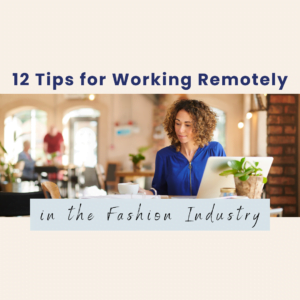
12 Tips for Working Remotely in the Fashion Industry

The post COVID-19 pandemic has normalised work from home and remote working. It is the new normal and it is here to stay and many companies are adapting to the hybrid lifestyle with having the flexible to work from home and office. This may also seem like it’s giving us freedom. However, there are various obstacles to overcome that will ease the working transition. Here are 12 tips that should definitely help while you are adapting to the new normalised office lifestyle. 1. Sleep No, it doesn’t mean sleep all day. We still have to do work. If we go to sleep and wake up at a regular time each day, it will prevent us from listening to the call of sofa to have a ‘quick nap’. 2. Have a morning routine Whether your morning begins with a cup of coffee or a full English breakfast. The time to relax is necessary to prepare yourself for the day ahead. Step out from your bed into your office, is unlikely to help with your work morale or productivity. 3. Separate your Spaces The environment does affect your behaviour. Spending all day in bed working will only lead to frustration. The best approach is to set up a separate workspace, which is quiet and comfortable. This ensures you have at least your bed to escape from work and relax, especially in cases where you are not allowed to leave the house. 4. Take a few breaks – Use a Pomodoro timer if necessary to remind you to take a break. – Breaks are allowed. Take advantage of it. This means you can make yourself break time treats in the comfort of your own kitchen. – Take your full hour lunch break. This time is needed to switch off from your work. – Another bonus about working from home, you can eat a hot home-cooked lunch. – Say Goodbye to sandwiches. For some, the family could actually use the dining room to eat together. 5.Exercise Exercise helps to maintain your immune system and fight stress associated with quarantine. There are countless of online workouts to choose from. 6.Socialise This is probably one of the most important to protect your mental health in social isolation situations. This could be simply by ringing or video calling your friends during your breaks. 7. Get dressed You may not need to go to the office, but you still need to get into the mind frame of working. Getting dressed may actually make you feel more ready for the workday. Avoid pyjamas. Remember ‘No Naps’. 8. Set your Hours Working from home does enable you to set your own hours, but no matter when you choose, you still have to do the work. Have set working hours whether that is 9-5, probably a time connected to your usual work routine. This will make for an easier adjustment. This will help to prevent under or overwork stress. Structure is essential. 9. Turn off Notifications ‘Out of sight and Out of mind’ is true when it comes to social media notifications. If you wouldn’t do it in the office, then you should do it when working from home. 10. Plan your Evenings Plan something fun for your evening to do as a reward for finishing your work. This can be as watching your favourite new Netflix series or starting the personal project you have been putting off for a while. 11. Listen to Music Maybe you’re used to a lively work environment with all your colleagues in the background. Listening to some music may help to break the silence and focus. 12. Go outside Go outside for a walk. Obviously, this depends on where in the world you are and whether you are restricted from doing so. Just stepping outside your front door could be useful to clear your head.  

Read More »
All

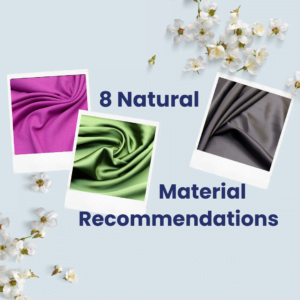
8 New Natural Textile Materials for your Fashion Collection

Natural fabrics are essentially textiles that are made up of natural fibres, they’ve beenaround for hundreds of years and are great for the environment. With no harsh chemicals toharm our environment, it is an ideal alternative to use if you are thinking of starting yourown clothing line. By choosing natural fabrics, you can also sell your products at areasonable price and they will last very long! We have put together a list of the top 8 natural fabrics that you can use in your daily life aswell as invest in. It is good to become familiar with the different natural fabrics that thereare to offer, as it will mean you understand the making process of them and be able to helpour environment. 1. Linen One of the oldest natural fabrics known to man, Linen is a derived from fibres of theflax plant. The fibre is super strong, absorbent and dries much faster than cotton,which makes it great for hot weather. Many garments are lines with linen, as it isvalue for its comfort and freshness during humid weather. Some other advantages oflinen include; it resists sunlight, it is washable and it is non-allergenic. 2. Cotton Cotton is known for its versatility. It is a very soft and comforting fibre that grows in a‘boil’ around the seeds of the cotton plants of the Gossypium. The fibre isbreathable, durable and easy to maintain. Similar to linen, the texture of cotton isvery soft and comfortable and is a popular fabric used in most forms of clothing.   3. Silk Silk is a natural protein-based fibre. The protein fibre of silk is composed of fibroinand is spun by the good old silk worm. Silk is known for its beautiful texture and it isknown to drape well, be breathable and hypoallergenic- what’s not to love about it?Silk is used mainly for night attire and evening gowns and has a lot of high value to it.   4. Wool Wool is a protein- based fibre obtained from sheep and other animals. It is great as itcan be blended with man-made fibres, making it easy and versatile to use. Great forwinter essentials, wool is a fantastic choice as it is warm, flexible, durable and it candye fairly easily, which means you can have a lot of creative freedom with it. 5. Bamboo The fibres of bamboo are produced from the bamboo plant itself. It takes roughly 3years to fully process bamboo, and can be used to make a variety of things, such asclothes, accessories and it is even used for medicinal purposes. Bamboo is very soft,durable and it is also easy to maintain. 6. Jute Jute is a fairly long and soft vegetable fibre that can be spun into very strong threads.It is produced mainly from plants and is known for its uses in making cloth forwrapping bales of raw cotton and is also fantastic for making coverings, curtains,carpets and so on. Jute is 100 per cent biodegradable and recyclable. 7. Mohair Mohair is known to be a ‘silk-like’ fabric and is made from the hair of the Angoragoat. It is super resilient and is known for its sheen, lustre and ‘diamond-like’appearance. It also has great heat-regulating properties. Both visually pleasing andfunctional, mohair is a fabric that you should definitely invest in. 8. Hemp Hemp is derived from the cannabis plant. It is one of the fastest growing plants to bespun into a useable fibre. It can be used for a variety of product, such as clothing,construction materials, paper and so on, therefore its versatility is excellent. It is alsovery durable, naturally resistant to mould and it does not lose its shape easily.Some great advantages as to why it is better to go for natural fabrics is because firstand foremost- it is great for the environment, but it is also great for you. You will findthat most natural fabrics are biodegradable, durable, comfortable, heat responsiveand naturally repellent to mould. Many fibres (such as cotton) also grow organically,meaning that no harsh chemicals are used in its process. Although this makes cottonmore expensive, it is long-lasting and has great factors, therefore it is most-definitelyworth your money.Natural fabrics moistures wicking abilities allow the fabric to feel ventilated, leaving anice feeling on your skin. These certain natural fabrics (such as linen) will keep youcool during hot and stick weather. As well as this, natural fabrics are far better forsensitive skin and causes less or almost no irritation. What’s Trending for 2019/2020 In recent affairs, ‘coffee leather’ has been a hit. Made from recyclable coffee beansand plants, a high-end sneaker brand nat-2 has launched a VEGAN sneaker madefrom coffee leather itself. Although it comes at a fairly big price tag ($700), it is inhigh demand! We also have Pineapple Leather. Hugo Boss launched a pair of pineapple leathershoes (otherwise known as Pinatex), the leather is made from fibres of the pineappleleave. It is chemical free, natural and has a very low environmental impact. Theappearance of this innovative leather is also rather appealing!

Read More »
All

What Does COVID-19 Mean for the Fashion Industry?

The COVID-19 pandemic has had a phenomenal impact on the world. The impacts have been immediate and some unavoidable, especially in terms of the fashion industry. Is there be any hope during such a crisis? What is Corona? Coronavirus (COVID-19) has been classed as a pandemic by the World Health Organisation (WHO). This outbreak has dominated the news , social media and conversations in the past few weeks. The pandemic means the outbreak of the disease is having worldwide effects. Where did it start? The source is suspected to originate from a Wuhan ‘wet market’ in China which sold both dead and live animals. What are the symptoms? – High temperature – Reoccurring cough How is Covid-19 affecting fashion? The Supply Chain The supply chains have been severely affected by worldwide manufacturers including Asian and European factories with countless disruptions due to quarantine and lockdown measures. The scale of the consequences of these interruptions is still unknown. However, some argue that this may propel businesses to secure their production in other manufacturing regions which are cheaper and less affected. Italy’s manufacturing region has not been suspended despite the country’s lockdown. There have been measures put in place to adjust and prevent the spread. Meanwhile, the biggest challenge is the dramatic reduction in demand with reports from suppliers receiving an average of 1000 handbag orders per month to none for the coming months. Travel bans also make sourcing management and traditionally buying systems difficult for fashion companies. Therefore, new systems are required to establish new connections with potential manufacturers for alternative production options. Fashion Consumption The fashion industry has been substantially affected by this occurrence. China itself has become a dominant fashion consumer, with its share of the global luxury market moving from 2 percent (2002) to 18 percent (2019). Despite this , COVID-19 has altered promising predictions, with brands such as Moncler recording an ’80 per cent’ decrease in customers visiting their mainland stores. This combined with the travel bans will undoubtedly affect consumers’ discretionary spending. The Fashion System The influx of the virus has meant that many fashion shows have been cancelled this season. This has revisited the question about the necessity of fashion shows with the associated labour and costs. Although fashion show originated as a form of showing potential clients and buyers the collections, they are mainly used as a spectacle for marketing agendas. Buyers and press are still privately shown the collections which are essential for brands to sell the collections. The outbreak has meant that buyers are doing this remotely and using high-definition look-books to make their buying decisions. The Armani Women’s Fall Autumn / Winter 2020 show has revealed a new response for fashion brands to operate fashion shows in response to the pandemic. Armani organised a digital fashion show to empty seats is admirable. Along with the Armani ‘message of love’ to China with a set of China models ending the show dressed in Armani pieces inspired by the Chinese culture. The Fashion Technology Solutions Supply Chain Management Use a high tech solution to connect to manufacturers and suppliers Systems that have a tracking system of the status of the order with immediate feedback about potential delays and issues Manage orders automatically For example, the Chanodil system can help buyers to manage their orders remotely. Fashion Consumption Brands must expand their focus with some fashion brands becoming over-reliant on sales in certain consumer markets such as China Fashion System Fashion brands must develop remote working strategies throughout their supply chain that facilitate productive work habits Fashion brands must reconsider and update the purpose of Fashion Weeks The main takeaway for the fashion industry for the aftermath of this pandemic is to be more nimble in their business approach. For example in terms of the use of technology and working remotely, brands had to reimagine their working processes. The insights from these adaptions should inevitably lead to effective solutions for out of date practices. This crisis brings a wave of negative consequences, and the fashion industry is being measured by the way it responds. The brands have the opportunity to support and work together to fight this with compassion and patience. Or they can carry on in denial at the risk to the lives of their employees and others. The choice is in their hands. In terms of the world response, it reveals the necessity for countries to work together than isolating themselves and throwing blame on others. We are all connected and responsible for our actions. How to prevent the spread of Covid-19? Below shows some precautions that you can take to protect yourself and others. Wash hands thoroughly with soap and water for 20 seconds Wash hands before and after work Use hand sanitiser Use a tissue when you cough or sneeze Only use public transport when essential Avoid social activities Avoid large groups Work from home Stay at least 2 metres away from someone with the virus Do you have the symptoms? Stay at home for 7 days The whole household should stay at home for 14 days after the first person’s symptoms Ring emergency helpline if you can’t cope with your symptoms Vulnerable People 70 or over Long-term health conditions Pregnant women Weakened immune system Chanodil can assist buyers and manufacturers through this process even during the Covid-19 pandemic by helping to find solutions for any order management and manufacturing issues. For more information, don’t hesitate to contact us at chathura@chanodil.com or on our website.

Read More »
All

What Technologies are Revolutionising the Fashion Industry?

The fashion industry is always evolving, not just in terms of design, but in terms of the technologies it uses to keep it processing. It is important for the fashion industry to be as digitalised as it can, as this will help it to move faster with the ever-changing trends it has. The impact of technology in our day-to-day lives is undeniable. Customer software technology has become a massive part of the fashion industry technical trend and it intends to become more and more innovative into the near future. 1. Mobiles in Fashion It is likely that you have at least one tech gadget, and that probably is a smartphone. Well, a smartphone is in-fact a big factor in ecommerce. Most consumers are big on online shopping where payments are made digitally. It’s been proven that shoppers prefer shopping online as it is faster, easier and hassle-free. The fashion industry has responded to this behavioural consumer change and focused on the development for mobile applications, creating applications that are easy to use so that customers can make purchases online. An example of this is Instagram’s shopping feature that makes shopping simple, by clicking on a liked item that can then direct you to the fashion products page so you can make your purchase. Brands such as Pretty Little Thing and Missguided all have these features as they are primarily an online store, so it is essential that they have this feature. As you can imagine, these days it is all about simplifying the process so that it’s as quick as possible and convenient for your customer, this is a great marketing proposal to have as you’re more likely to drive sales in your fashion business, therefore it is important to focus on mobile technology within fashion. 2. Tech-Inspired Fashion Shows Fashion shows still play a big part, and it is what most high-end fashion designers work towards throughout summer and winter. With the high pressure of each fashion show being modern and memorable, designers have decided to incorporate technology on the runway through things such as; holographic projections, 360-degree panorama, 3-D motions and much more. There is a variety of custom software used in programming the lights, music and other gadgets throughout the fashion show, proving that technology plays a huge part in succeeding the brand. You’ll also find that most recently, fashion shows can now be streamed online through a ton of social media platforms such as Facebook, Instagram, Twitter, or even Amazon Prime, an example of this is Rihanna’s Fenty X Savage show, where she showcased her new lingerie collection- this was recently streamed on Amazon Prime. 3. 3-D Print Tools and Software in Fashion Even though online shopping is much more popular than going into a physical store, a big challenge that designers and fashion brands face is trying to sell the ‘look and feel’ of the garment, as viewing it online can be deceptive- how can you convince a customer to purchase an item without them being able to feel the texture of it or try it on? 3D custom software development has recently come in, that enables virtual browsing, visually impact-full prints, and richly textured fabrics. Retailers can also collect data metrics to enable them to analyse the consumers buying trends. By having the technology to analyse their consumers behaviour and buying patterns, that can strategically formulate the right fashion products that will sell for the future. Virtual / Augmented Reality (VR) In our recent article we discussed how ‘Ai is Reshaping the Fashion Industry’ – but what is VR? As mentioned before, it is easier for customers now to browse through products and purchase it through the click of a button. However, many retailers have face major backlash from customers who ordered items that didn’t match the online material they viewed the product on. However, with the movement of VR platforms, we can now merge the physical and online world of retail. An example of this is the ‘try on avatars’ which are taking a big hit in the world of fashion. Apps such as the DressingRoom are using AR to allow online shoppers to try on outfits on an avatar- they can even customise the measurements before committing to buying the product. Technology freedom like so, allow customers shopping experience to be clearer and trustworthy. It will also add value to the retailers, as they can fully assess the consumers used of their site which they can then customise their personal experience. 4. Mobile PLM (Product Life-Cycle) within the Fashion Industry PLM in industry is the process of managing the entire lifecycle of a product; from inception all the way through to engineering design and manufacture. PLM plays an important part in the fashion and apparel industry. Over the last few years, there has been a mobile version PLM created, in order to help in the management of overall operations and logistics for global brands. As the fashion is a fairly ever-changing and fast-paced environment, it needs constant communication amongst various stakeholders. With the use of Mobile PLM, it is now possible to undertake important tasks and handle workflows in realistic timing. Mobile PLM has introduced the concept of automation within the world of fashion, this leads to better clarity of date along with improving the management of time per tasks. 5. Beacons and Geo-fencing in Fashion Geofencing is essentially a ‘virtual fence’. It allows the recognition of when a device enters and leaves a certain area (in this case a retail store). This technology is dependent on smartphones, as the geofencing is enabled by the use of GPS. The main objective of embedding technology into the fashion industry is to achieve a customized experience to its consumers. Beacons are small sensors that are positioned in retail stores, they basically connect to smartphones and push relevant content in them. As a result, this helps fashion retailers to send out important commercial content to the consumers mobile, this allows fashion brands to send

Read More »
All

Chanodil Visits ISPO Munich

What is ISPO Munich? ISPO Munich is the largest sports business trade fair in the world, which happens yearly in Germany. The fair is held Messe München exhibition centre. The organisation is guided by these three mottos: BE RESPONSIBLE. BE ACTIVE. BE CREATIVE. The trade fair hosts over 2,800 exhibitors related to sports products including Snowsports, Outdoor, Wearable Technologies and Health & Fitness. Source: ISPO Munich Why did we visit? We were excited to visit ISPO Munich to broaden our network to find clients and potential business collaboration partners. ISPO seems to be an exciting place to learn about the latest technologies in the sports and fashion sector. Also, we were eager to learn about the latest trends and big ideas affecting the fashion industry. What did we find? Learning We found that ISPO had many opportunities to have open discussions with experts and learn about new technologies. This was accessible through the Sustainability Hub and ISPO Textrends Hub. Networking The substantial benefit of attending such a fair was that we were able to make new contacts with a variety of companies from around the world. Below we have given more details of the companies we met the fair. Cottonworks Twitter: cotton_works Instagram: cotton_works Sector: Manufacturing, Suppliers, Education, Textile, Raw Materials Location: USA Who are they? The CottonWorks program was developed by Cotton Incorporated, as a resource for the fashion and textile industries. This resource includes webinars, workshops, market and trend analysis. Cottonworks has five key online resources: Defects Glossary – this shows types of defects with the fabric and processes involved. Textile Encyclopedia Production Dictionary Fabricast- the cotton related fabric collection developed by Cotton Incorporated. Trend Forecast Source: Cottonworks EA7 Sector: Fashion, Apparel, Sportswear, Outwear, Snowsports Location: Italy Who are they? EA7 is a subsidiary brand as part of the Italian fashion brand, Emporio Armani. EA is named after Emporio Armani. However, the number 7 is inspired by the fashion designer’s admiration for an AC Milan football player, Andriy Shevchenko. The EA7 brand specialises in sportswear and casual clothing. The focus is on using high-quality fabrics and materials to be worn as part of an everyday and sporty lifestyle. Source: EA7 UYN Sector: Apparel, Sportswear, Outwear ,Snowsports , Technical Innovation Location: Italy Who are they? UYN means Unleash Your Nature, which is owned by Trerè Innovation s.r.l and based in Mantua, Italy. The company specialises in producing high-tech apparel. The company highly invests on understand all aspect of their market from design to distribution, with their research labs and partnerships with renowned athletes. They aim to be the number one choice for athletes from amateur to Olympian. Source: UYN Dainese Sector: Apparel, Sportswear, Outwear, Snowsports ,Technical Innovation Location: Italy Who are they? The Dainese brand began in 1972, producing protective wear for motorbike riders. Dainese has since expanded its range specialising in highly technical sportswear. In 2017, the CEO of Dainese was awarded the ‘Excellence of Year/ Innovation & Leadership’ and ‘CEO of the Year’ by the Le Fonti Awards for Innovation and Human Resources. One of their latest technical innovation is the ‘Concept 001’ which is ergonomically designed for high safety and performance of skiers. Source: Dainese Suunto Sector: Sportswear, Snowsports ,Technical Innovation, Outdoor wear, Wearable Electronics, Diving, Sports watch Location: Finland Who are they? Suunto was formed in 1936 after the founder Tuomas Vohlonen developed more accurate compasses for his orienteering. Over the years the company has continued their pursuit in finding the ways to support athletes during their most extreme adventures, from deep-sea diving to mountaineering. The company’s portfolio includes highly technical watches, compasses and accessories. Suunto is part of the sporting goods company Amer Sports. Source: Suunto Movesense Sector: Sportswear,Technical Innovation, Outdoor wear, Wearable Electronics, Sports watch Location: Finland Who are they? Movesense is a platform developed by the sports watch brand Suunto. This platform allows users to build their own wearable electronics at a cost-efficient price. Movesense also has the Movesense Academic Program to work with institutions and researchers to develop solutions for working with technical hardware. Source: Movesense Mode Information GMBH Sector: Fashion, Design, Books, Magazine, Research, Trend Forecasting, Publisher, Supplier Location: Germany Who are they? Mode Information is one of the world’s leading publishers of trend information for Fashion, Interiors and Lifestyle products. The company provides a vast amount of resources relating to trend forecasting and colour management. These resources are essential for designers and brands during their early stages of developing a product by giving them valuable consumer insight. Source: Mode Information How successful was our presence? ISPO Munich markets itself as having a high exhibitor loyalty rate. We agree that from our experience that it will be a trade fair we plan to visit every year in the foreseeable future. If you are interested in developing your own sportswear collection, we can help. Please contact: chathura@chanodil.com

Read More »
All

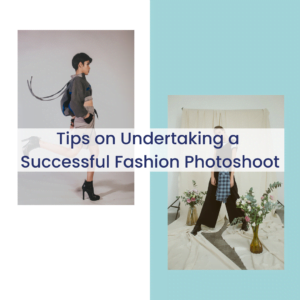
Tips on Undertaking a Successful Fashion Photoshoot

Proposing a photoshoot for your fashion brand is a very creative and exciting task. However, there is a lot of work that goes into it, you’ll need to consider MUAs to hire for the day, create mood-boards, hire fashion assistants, set up the correct equipment and make sure you have the perfect lighting. All of this is required in every successful fashion photoshoot. This can be challenging as there are so many tasks involved and it involves a lot of people with different professional background, and on top of that, you’re working against a schedule! The best thing you can be in a fashion photoshoot, is calm. Easier said than done for sure, but with the guide, we hope to settle the stress and give you some useful information. Remember, the ultimate goal of the fashion photoshoot is to produce some long-lasting and eye-catching content for your fashion brand. 1. Research HEAVILY Depending on the type of fashion photoshoot that you are trying to conduct (i.e a urban shoot for your streetwear brand), you will need to make sure you have a brief for your photoshoot. You need to be aware what kind of style photography you want, you need to be able to reference artists who may be a muse for your shoot, you need to conduct visual research. Have a look at look-books and attend exhibitions if you need a head start in getting inspired. Decide what type of shoot you want and the angles of the photos that work best to represent your product. 2. Create a List Create a detail list that consists of budgeting and planning. It should contain as much detail as you can, such as the main kind of shots you want, how many outfits you are shooting, the required props, locations for the shoot, contact list of where you may have loaned the props/ accessories, contact list for any assisting workers, colour themes, timeline references, artist references- all in all, try to add as much as you can to the list, and tick it off as you go along. Your list may also include detailed information of the lighting, angles and expressions you want in your shoot. Remember, a photoshoot is ALL visual, so you need to have your planning down to a T. Your MUA, photographers, models, hair team and so on will all need to understand how your mind works and what you expect from the photoshoot, so having a visual documentation is necessary. 3. Your Team As mentioned previously, you will likely to have a big team working with you; this team will include stylists, photographers, hair and makeup artist, technical people, editors, models and so on. Ensure that the people you bring on board for the shoot are on board with you and your fashion brand. Ultimately, it is like interviewing them, and you need to ensure that they are confident, driven and have a ‘can do’ attitude for the shoot. Fashion photoshoots can be very long and tiring, so you want a passionate team who expect a successful end result. On a side note, consider getting creative university students or graduates to help you out. They are more likely to be hard-working and passionate about gaining some extra fashion experience, plus they’ll be able to build on their own portfolio, so it is a win-win for the both of you. 4. Establish the Purpose of your Photos You need to be aware of what your images are used for, as each style of photography is appropriate for different things. Are your images for a look-book, website, social media post? You may want a bulk of images for all these resources, but make sure the style, size, composition and overall look is suitable for each platform. For example, for a look-book, you may want more exciting location-based images for your audience to scroll through but for your website you may want clear images with good lighting and a white background, which means you’ll probably have to undertake a separate shoot…it all goes into the planning! Working a budget out is also very important as you want to be able to get everything you want out of the fashion photoshoot. 5. Create a Call Sheet This will be another important document you need to have- but it isn’t vital. The call sheet is an online template you can use to help you and your team. It will include the logistical side of things such as the timing of the shoot, arrival times, parking details, facilities available, the location, the overall schedule for the day, and it may also list the detail of the outfits for your fashion brand and which model will be wearing what. You can email this time sheet a few weeks in advance to your team prior to the shoot. Make sure you ask all your team to arrive 30 minutes to one hour early before the shoot, to avoid any delays. 6. Ideas for Seeking Inspiration We are sure that you have a visual idea of how you want your fashion photoshoot to turn out. But we’ve decided to give you some extra help. One of the most important things you can do for your shoot is using an iconic location. You will notice that well-established fashion houses have always been successful in picking remarkable locations for there shoots. Using a great location that is suitable for your brand, will have a big impact on your consumer as it will be eye-catching and memorable. Have a look in fashion magazines like Vogue, Dazed and Hunger for photo-shoot inspiration; you may even come across some useful fashion photographers. 7. Create a Story-board Similar to the creation of a movie story-board, you should create one for your photoshoot. It should showcase a general ‘plot’ of how you want your shoot to go, the angles you want and so on. This will also help you take control of your day. You’ll also be able to plan how

Read More »
All

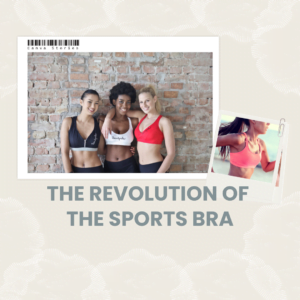
The Revolution of the Sports Bra

The sports bra is around 42 years old and is still an effective athletic undergarment used by woman. Over the past few years, the sports bra has also been made to be seen as a ‘fashion’ statements, besides its useful functions and comfortable factors. The sports bra growth rate has out-space other styles of bras for the past few years and continues to be a essential garment in a woman’s wardrobe. The Story of Nike Well established brands such as Nike, Adidas and Gym Shark are all known to sell best-selling sports bra, and they don’t intend on stopping anytime soon. In-fact, the making of the sports bra is getting more and more stylish and innovative as we speak. “It is the most important piece of apparel for the active woman — a good one enables women to play sports, and sports can give women confidence in life,” -Janett Nichol, VP of Apparel Innovation. The sports bra has a pretty big job; it needs to create comfort, minimise bounce and avoid causing tissue damage during exercise- the creation of the sports bra is a lot more complicated than you think! In 2012, Nike released the Flyknit Bra with the Flyknit Racer. It is a digitally-engineered knitting process, best known for its lightweight properties, formfitting and almost seamless shoe uppers. In recent times, this technology is used largely across Nikes footwear; an example of this is the Epic React running shoes. As stated on the Nike website, taking the Flyknit from the foot to the body took over 600 hours of testing from various engineers and designers. “The goal of the Nike FE/NOM Flyknit Bra was maximum support and comfort that would allow women to feel and look amazing, while doing anything they choose,” – Rendone. The bra itself is made from ultra-soft nylon-spandex yarn that creates that ultimate sculptured fit to your body whilst creating a seamless feel with the two single-layer panels. The Flyknit bra also has encapsulation properties with compression properties to ensure that the bra is offering the best support, comfort and shape with additional components such as wires, pads and elastics. The Flyknit Nike bra is 30 per cent lighter than any of their other bras as is uses a lot less material and seam-work, making it innovative and sustainable. Comfort is Key Some would agree that we are in the process of an undergarment revolution. Woman want comfort over cleavage, which makes the sports bra a special item within the gym sector. An NPD survey found that 46 per cent of millennials who wore a sports bra within the past seven days decided to incorporate it into their daily wardrobe. That said, it is safe to assume that sports bras are a key best seller within the fashion industry, but especially within the world of gym-wear. “Comfort is a dominant theme throughout the fashion world, and today’s bra consumer, especially Millennials, is seeking both physical and personal comfort,” -Marshal Cohen, chief industry analyst, The NPD Group, Inc. As mentioned previously, the sports bra came into fashion as a functional item. However, over the years the bra has turned into a fashionable statement piece. The brand Lululemon itself created a whole line of sports bras for streetwear, which proves its versatility. The History of the Sports Bra 2,500 BC: With an attempt to create product to hold the breast in place and provide firmness, woman in Ancient Greece created the Apodesmo- a band of linen to wrap around their chest 1820: The bust bodice was created as an undergarment for empire-waist fashion trends 1911: Fashion designers created the “sports corset”, traditionally wired with metal, this corset was made with elastic 1914: Mary Phelps-Jacobs patents the first bra. In other news, the tango craze influences a corset made for the pure purpose of dancing 1915: A corset was designed primarily for the skating debut The birth of the sports bra came into practise when some students from the University of Vermont realised that if nobody was going to design a solution for the painful breast bounce they experienced themselves (whilst jogging), then they would have to create something themselves- essentially, if the problem won’t get fixed, you got to do it yourself! This moves us on to 1977 where Hinda Miller and Lisa Lindahl called a friend called Polly Smith (who works in the universities costume department). After some tricky attempts, the three females created a prototype of two jockstraps sewn together. A Final Note Creating a bra is not simple. The process of a sports bra with the ultimate support is still in works, and apparel brands are still working on creating the best sports bra that provides comfort and ease in every aspect. Despite the hours of research that goes into this, the balance between controlling the ‘bounce’ per say and making the sports bra comfortable is still hard to achieve all in one. You also need to have other considerations, like the sweat support, straps, slippage, fit as well as wanting it to look appealing, therefore, it is safe to say that producing an innovative and functioning sports bra can be proven quite difficult and there are a lot of design requirements that come with it.

Read More »